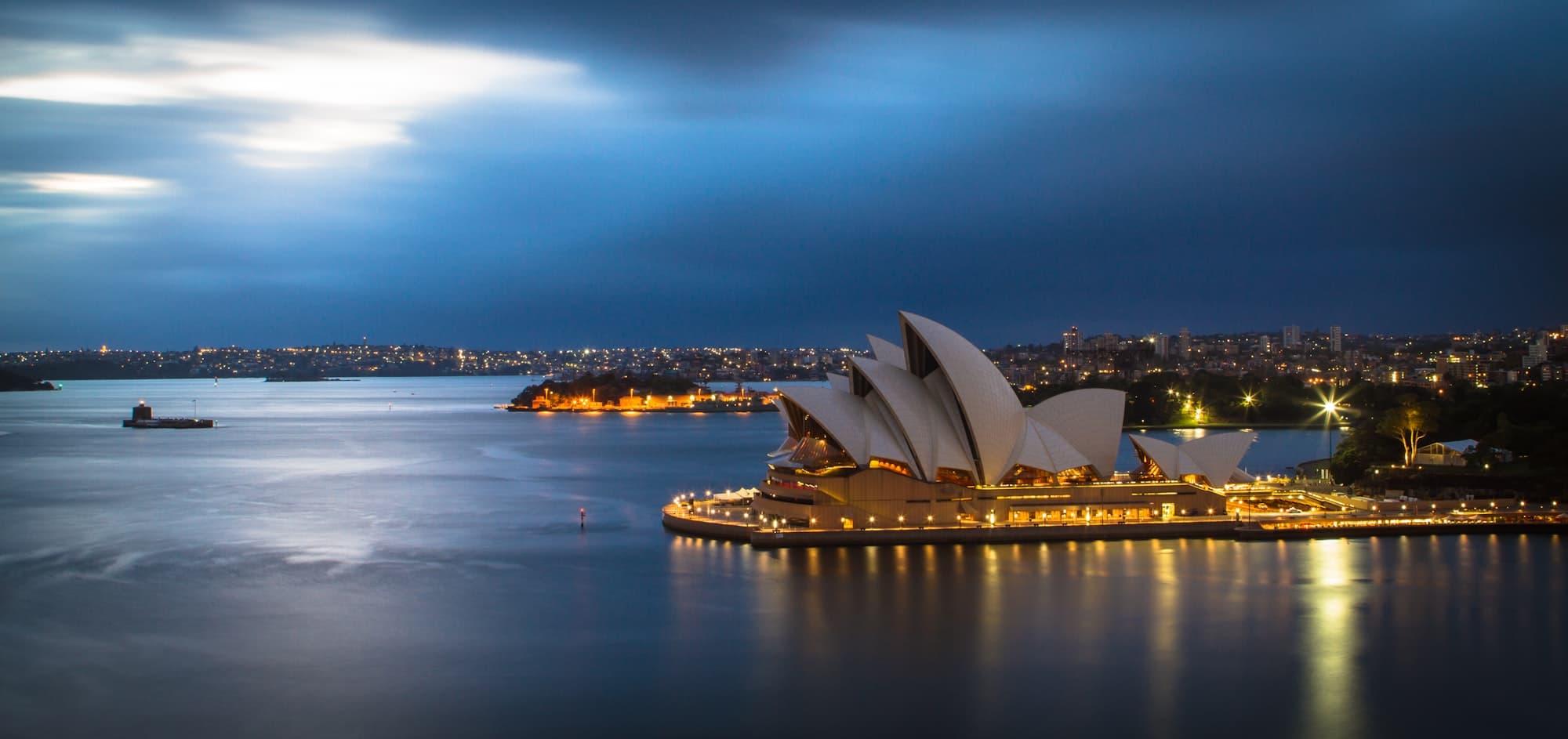
Australia is a continent, an island, and a country — a place of such extraordinary scale and diversity that any description risks underselling it. Sydney's harbour is arguably the world's most beautiful urban waterscape. The Great Barrier Reef is the largest living structure on Earth. Uluru at sunset changes colour from orange to deep crimson in minutes. The wildlife — kangaroos, wallabies, koalas, quokkas, wombats — exists nowhere else on the planet in such concentration.
The distances are the defining reality of Australian travel — Sydney to Perth is farther than New York to London. This country rewards those who choose their region carefully and don't try to cover everything in one trip. A focused fortnight doing Sydney plus either the Red Centre, tropical Queensland, or the southeastern states is far more satisfying than a rushed continental sprint.
Best Time to Visit Australia
Australia's vast size means there is no single best time to visit — each region has its own optimal window. The general rule: visit the south (Sydney, Melbourne) October–April; the north (Darwin, Queensland, Great Barrier Reef) April–September, when the wet season has ended.
Wildflowers in Western Australia, excellent weather in the southeast, shoulder season for prices. The north is drying out after the wet season.
Hot and humid in the north (monsoon season; cyclone risk). Sydney and Melbourne are warm and lively but can exceed 40°C in heat waves.
Excellent throughout the country. The north is drying out; the southeast is beautifully temperate. The Barrier Reef is at its clearest.
Perfect for the north (Darwin, Cairns, the Reef) and for the Red Centre (Uluru). Cool in the south but pleasant for cities.
Australia Weather by Month
Southern-hemisphere seasons (figures for Sydney). Summer is Dec–Feb; winter Jun–Aug. The tropical north has its own wet/dry pattern.
| Month | Avg High | Conditions |
|---|---|---|
| Jan | 26°C / 79°F | Summer/Peak |
| Feb | 26°C / 79°F | Summer |
| Mar | 25°C / 77°F | Warm |
| Apr | 22°C / 72°F | Autumn |
| May | 19°C / 66°F | Mild |
| Jun | 17°C / 63°F | Winter |
| Jul | 16°C / 61°F | Winter |
| Aug | 18°C / 64°F | Winter |
| Sep | 20°C / 68°F | Spring |
| Oct | 22°C / 72°F | Spring |
| Nov | 24°C / 75°F | Warm |
| Dec | 25°C / 77°F | Summer/Peak |
Sydney
The Opera House and Harbour Bridge, Bondi Beach, the Royal Botanic Garden, Darling Harbour, and the best café culture in Australia make Sydney one of the world's great cities to simply inhabit for a week.
Great Barrier Reef
The world's largest coral ecosystem — 2,300km off the Queensland coast. Snorkelling and diving from Cairns or the Whitsunday Islands reveals extraordinary marine diversity. Best visibility April–November.
Uluru & the Red Centre
The sandstone monolith at the heart of the continent changes colour through sunrise and sunset in ways that photographs can't capture. The surrounding Kata Tjuta (the Olgas) are equally spectacular. The Anangu people's cultural connection to this land is profound.
Melbourne
Australia's cultural capital — extraordinary coffee culture, world-class street art in Hosier Lane, the Queen Victoria Market, the MCG (the world's largest cricket stadium), and some of Australia's best restaurants.
Daintree Rainforest & Cape Tribulation
The world's oldest tropical rainforest meets the Great Barrier Reef at Cape Tribulation, north of Cairns. Cassowaries, tree kangaroos, and saltwater crocodiles inhabit an ancient landscape.
Great Ocean Road & the Twelve Apostles
The 243km coastal drive west of Melbourne past surf beaches, rainforest, and the iconic limestone sea stacks of the Twelve Apostles is one of the world's great road trips.
🏨 Find Hotels in Australia
Compare 2M+ properties on Booking.com — free cancellation on most stays. Filter by price, neighborhood, and traveler ratings.
Search Hotels in Australia →Affiliate link — we may earn a small commission at no extra cost to you.
🎟️ Book Top Experiences in Sydney
Skip-the-line tickets, day trips, and guided tours — Viator lists experiences worldwide, with free cancellation on most bookings.
Browse Tours on Viator →Affiliate link — we may earn a small commission at no extra cost to you.
Where to Stay in Australia
Choosing the right base shapes your whole trip. Here are the best areas for different travel styles:
Sydney — The Rocks / Circular Quay · Harbour access, sightseeing
The Rocks is Sydney's historic waterfront precinct, walking distance to the Opera House and Harbour Bridge. Premium prices, but unbeatable position.
Cairns — Cairns CBD or Port Douglas · Great Barrier Reef base
Cairns is the main departure point for Reef day trips. Port Douglas (65km north) is smaller, more upmarket, and has Four Mile Beach.
Uluru area — Ayers Rock Resort (Yulara) · Red Centre access
Yulara is the only accommodation village near Uluru — ranging from budget camping to the luxurious Longitude 131° glamping resort. Book well ahead.
Melbourne — CBD / Fitzroy · Food, coffee, culture
The CBD for hotels near major attractions; Fitzroy and Collingwood for boutique accommodation in Melbourne's hippest suburbs.
Getting to Australia
Most international visitors arrive at Australia's main gateway (SYD). Flight times vary widely depending on where you're travelling from — a few hours from neighbouring countries, or the better part of a day from across the world. The fastest way to plan your journey is to check the exact flight time and compare fares from your home airport.
Getting Around Australia
- Domestic flights are essential for covering Australia's distances — Qantas, Jetstar, Virgin Australia, and Rex connect all major cities. Book ahead for competitive fares.
- Renting a car is excellent for the Great Ocean Road, the Hunter Valley wine region, coastal Queensland, and the Red Centre. Campervans (motorhomes) are very popular for multi-week road trips.
- In Sydney and Melbourne, the train and tram networks are efficient for getting between major areas. The Opal card (Sydney) and Myki (Melbourne) handle all public transport.
- The Ghan (Adelaide to Darwin) and the Indian Pacific (Sydney to Perth) are legendary long-distance train journeys, but primarily a tourism experience rather than transport.
Australia Travel Budget
Australia is an expensive destination by any measure — accommodation, food, and transport all cost significantly more than in Southeast Asia or Europe. A tight budget requires hostel stays and self-catering; a comfortable experience requires serious budget.
Hostels and budget motels, supermarket cooking, buses, and free beaches and parks.
Mid-range hotels, restaurant meals, domestic flights, Great Barrier Reef day trip.
Resort accommodation, private reef charters, helicopter Uluru tours, fine dining.
Essential Australia Travel Tips
Don't try to cover the whole country in one trip
Australia's distances are genuinely continental. Sydney to Perth is as far as London to Tehran. Choose one or two regions and do them justice rather than spending half your time in airports.
The wildlife needs context
See kangaroos in the wild at dawn and dusk (they're crepuscular). Koalas are real but notoriously sleepy — they sleep 20 hours a day. Taronga Zoo in Sydney and Lone Pine Sanctuary in Brisbane are excellent for guaranteed wildlife encounters.
Sunscreen is not optional
Australia has the world's highest rate of skin cancer. The UV index regularly hits 13+ in summer. SPF50+ sunscreen, a hat, and covered arms are essential for outdoor activities.
Tipping is not expected
Australia pays hospitality workers fairly. Tipping is appreciated but never expected — round up or leave 10% in good restaurants if you wish, but there is no social pressure.
📶 Need Mobile Data While Traveling?
Activate an international eSIM in minutes, skip expensive roaming fees, and stay connected the moment you land — no physical SIM card needed.
Get a Travel eSIM with Yesim →Affiliate link — we may earn a small commission at no extra cost to you.
Plan your trip to Australia
Flying into Australia
Entry & visas
Frequently Asked Questions
How long do you need in Australia?
Minimum 14 days for a focused trip to one or two regions. Three weeks lets you do Sydney, the Red Centre, and Queensland comfortably. A month is ideal for a comprehensive east coast trip with time in Melbourne and the Whitsundays.
What is the best Australian city to visit?
Sydney for the Opera House, harbour, and Bondi Beach (the classic choice). Melbourne for food, coffee, culture, and art. Cairns for Reef and Daintree access. Most visitors do Sydney + one more city.
When should I visit Australia?
September–November is a great all-around time — good weather in Sydney and Melbourne, the Reef's dry season, and before the summer crowds. For the Red Centre, April–September is best (avoiding summer heat exceeding 45°C).