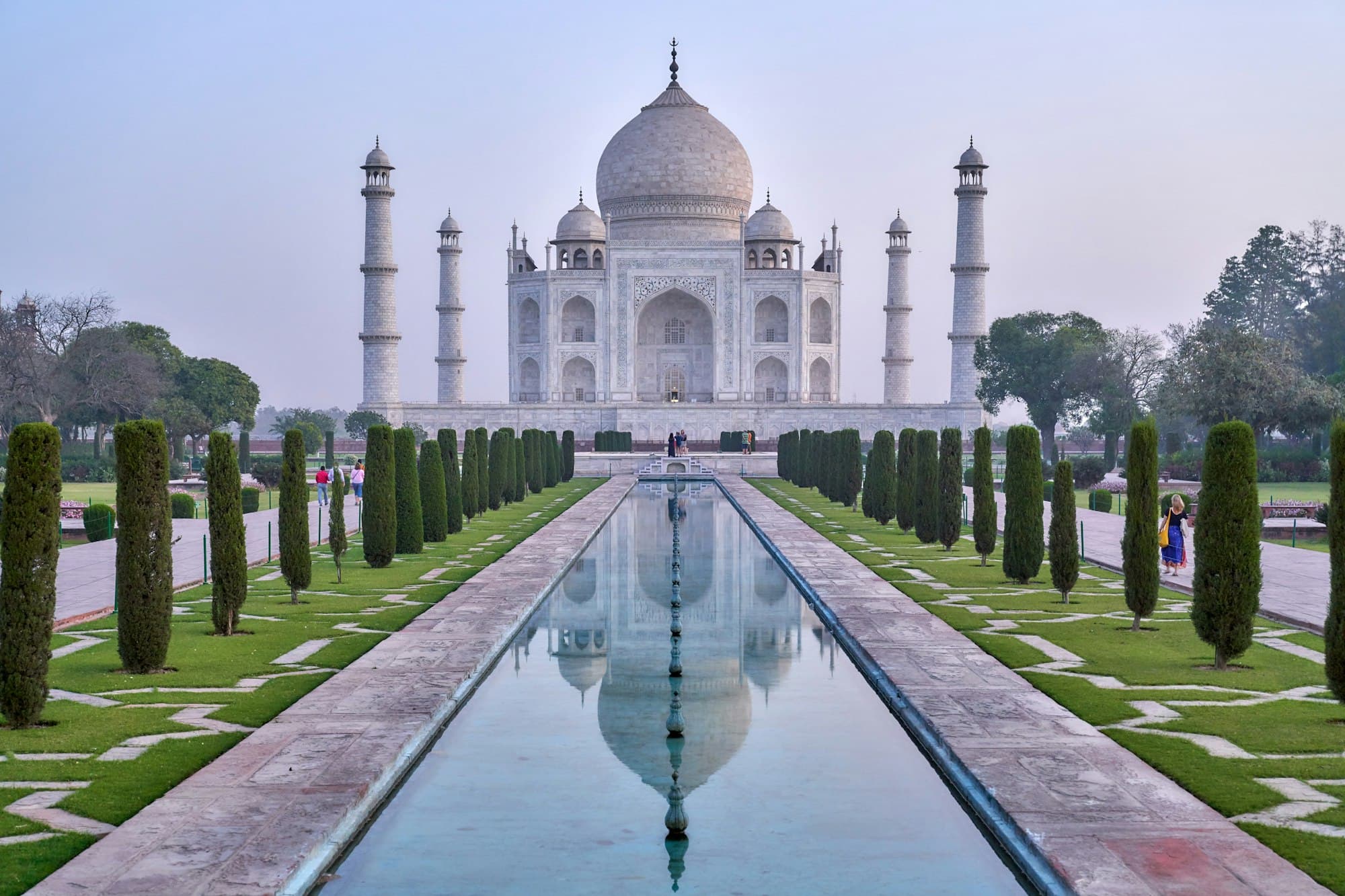
India is the world's most complex travel destination and, for many, its most rewarding. A country of 1.4 billion people, 22 official languages, and 5,000 years of continuous civilization cannot be summarised — it can only be experienced. The Taj Mahal is as extraordinary as it is famous. The burning ghats of Varanasi confront mortality in a way no other place on Earth does. The backwaters of Kerala offer an almost surreal tranquility. Rajasthan's desert forts and painted havelis are cinema made real.
India challenges and rewards in equal measure. The infrastructure is improving rapidly, the food is world-class at every price level, and the hospitality is genuine. Plan carefully, accept that plans will change, give yourself more time than you think you need, and be prepared for the possibility that this country will change you.
Best Time to Visit India
The best time to visit most of India is October–March, when the monsoon has ended and temperatures are cooler. The pre-monsoon heat (April–June) can be extreme (45°C+ in Rajasthan); the monsoon (June–September) transforms the landscape but disrupts travel.
The prime travel window for most of India. Comfortable temperatures, clear skies, and active wildlife parks. December–January can be cold in the north (0–5°C nights in Delhi).
Extreme heat across the north and centre (Delhi, Rajasthan regularly reach 45°C+). Ladakh and the Himalayas are exceptions — cool and spectacular.
Heavy rainfall transforms the landscape to vivid green. Kerala is beautiful in the monsoon. Major disruptions to road travel in many areas.
The landscape is lushest in October before drying. Wildlife parks reopen after monsoon closure. A good transitional month.
India Weather by Month
Figures for Delhi. The cool season (Nov–Feb) is the best time to visit; Apr–Jun is intensely hot; the monsoon runs Jul–Sep.
| Month | Avg High | Conditions |
|---|---|---|
| Jan | 21°C / 70°F | Cool/Peak |
| Feb | 24°C / 75°F | Pleasant |
| Mar | 30°C / 86°F | Warm |
| Apr | 36°C / 97°F | Hot |
| May | 40°C / 104°F | Very Hot |
| Jun | 39°C / 102°F | Very Hot |
| Jul | 35°C / 95°F | Monsoon |
| Aug | 34°C / 93°F | Monsoon |
| Sep | 34°C / 93°F | Monsoon |
| Oct | 33°C / 91°F | Pleasant |
| Nov | 28°C / 82°F | Cool/Peak |
| Dec | 23°C / 73°F | Cool |
The Golden Triangle: Delhi, Agra & Jaipur
The classic first trip — Delhi's Old City chaos and Mughal monuments, the Taj Mahal at Agra (the most beautiful building in the world to many visitors), and Jaipur's Pink City forts and palaces. Manageable in 8–10 days.
Varanasi
The holiest city in Hinduism, built on the banks of the Ganges. The ancient ghats where the living pray and the dead are cremated, the dawn boat rides past temple spires, and the Ganga Aarti evening ceremony are among the world's most powerful travel experiences.
Kerala Backwaters
The network of lagoons, canals, and lakes behind Kerala's Malabar coast — best explored on a houseboat (kettuvallam) overnight, drifting past paddy fields, fishing villages, and coconut groves.
Rajasthan
India's most dramatic state — the desert forts of Jodhpur, Jaisalmer, and Bikaner; the lake palaces of Udaipur; the tiger reserves of Ranthambore; and a rich craft and textile tradition.
Hampi
The ruins of the Vijayanagara Empire scattered across a surreal boulder landscape in Karnataka — one of India's most atmospheric archaeological sites and increasingly popular with travellers who venture south.
Goa
India's smallest state has a distinctive Portuguese-colonial character, excellent beaches, and a long-standing traveller culture. North Goa's parties and south Goa's quiet beaches suit different moods.
🏨 Find Hotels in India
Compare 2M+ properties on Booking.com — free cancellation on most stays. Filter by price, neighborhood, and traveler ratings.
Search Hotels in India →Affiliate link — we may earn a small commission at no extra cost to you.
🎟️ Book Top Experiences in Delhi
Skip-the-line tickets, day trips, and guided tours — Viator lists experiences worldwide, with free cancellation on most bookings.
Browse Tours on Viator →Affiliate link — we may earn a small commission at no extra cost to you.
Where to Stay in India
Choosing the right base shapes your whole trip. Here are the best areas for different travel styles:
Delhi — Connaught Place / Lodhi Colony · Central Delhi access
Connaught Place is central and walkable; Lodhi Colony (near Lodhi Garden) is quieter with good boutique options. Avoid the old tourist ghetto of Paharganj for anything beyond budget backpacker hostels.
Agra — Near the Taj Mahal · Taj Mahal access
There's no reason to stay in Agra beyond a night for Taj Mahal access — stay near the East or South Gate for easy morning and sunset visits.
Jaipur — Pink City · Heritage, Rajasthan immersion
Heritage hotels (havelis) in the Pink City area give the most atmospheric Jaipur experience. Many old merchant houses have been converted into excellent boutique hotels.
Kerala — Houseboat or Fort Kochi · Backwaters, colonial heritage
Fort Kochi has beautiful Dutch and Portuguese colonial architecture and the famous Chinese fishing nets. Book a houseboat for the Alleppey backwaters through a reputable operator.
Getting to India
Most international visitors arrive at India's main gateway (DEL). Flight times vary widely depending on where you're travelling from — a few hours from neighbouring countries, or the better part of a day from across the world. The fastest way to plan your journey is to check the exact flight time and compare fares from your home airport.
Getting Around India
- India's rail network is extensive and the best way to travel between major cities — comfortable, safe, and extraordinary for experiencing the country. Book on the IRCTC website or app at least a week ahead for AC sleeper berths.
- Domestic flights (IndiGo, Air India, SpiceJet) are cheap and fast for long distances (Delhi to Goa, Delhi to Kochi). Check prices against trains — flights are often barely more expensive.
- Within cities, use Ola and Uber (both operate in India) for safe, metered rides. Auto-rickshaws are cheaper but require negotiating the fare in advance.
- Some routes (Kerala backwaters, Rajasthan desert forts) are best done by hired car with a driver — very affordable in India, and a dramatically better experience than navigating alone.
India Travel Budget
India is among the world's most affordable travel destinations for Western visitors. Even comfortable mid-range travel costs a fraction of what equivalent quality would cost in Europe or North America.
Guesthouses and hostels, thali meals and street food, second-class sleeper trains.
Heritage hotels and comfortable guesthouses, restaurant meals, AC train travel, auto-rickshaws.
Palace hotels (Taj Group, Oberoi), private driver, fine dining, and private tiger safari drives.
Essential India Travel Tips
Allow more time than you think you need
Trains run late. Roads are slower than maps suggest. Markets are more engaging than you planned. The best experiences in India come from slowing down and letting the country come to you.
Get a local SIM card at the airport
Jio and Airtel offer cheap data plans that transform navigation, translation, and communication. Foreign SIMs don't work on India's networks; a local SIM takes minutes to set up at the airport.
The street food is outstanding but follow the queue
The best street food stalls have locals queuing. Chaat, dosa, idli, paratha, and biryani are all at their finest from specialists. Drink bottled water and avoid raw salads at budget establishments.
Dress modestly for temples and mosques
Cover shoulders and knees when visiting religious sites. Many sites provide wraps. Removing shoes is required at most temples, mosques, and Sikh Gurdwaras.
📶 Need Mobile Data While Traveling?
Activate an international eSIM in minutes, skip expensive roaming fees, and stay connected the moment you land — no physical SIM card needed.
Get a Travel eSIM with Yesim →Affiliate link — we may earn a small commission at no extra cost to you.
Plan your trip to India
Flying into India
Entry & visas
Frequently Asked Questions
Is India safe for tourists?
India is generally safe for tourists. The main risks are petty theft in crowded areas, occasional scams near major tourist sites, and traffic accidents. Solo female travellers should be aware of safety in certain areas (research specific regions) and dress conservatively in rural areas and smaller towns.
What should I see on a first trip to India?
The Golden Triangle (Delhi–Agra–Jaipur) is the classic first-timer route for a reason — it's manageable, the Taj Mahal is extraordinary, and Rajasthan's colour and culture are immediately captivating. Varanasi is a profound extension; Kerala a complete contrast.
How much does it cost to travel India?
India is exceptional value for Western visitors. A comfortable mid-range trip (good guesthouses, restaurant meals, AC train travel) costs roughly US $50–80 per day. Budget travel on ₹1,500–2,500 per day (US $18–30) is very feasible and still allows for good food and safe accommodation.