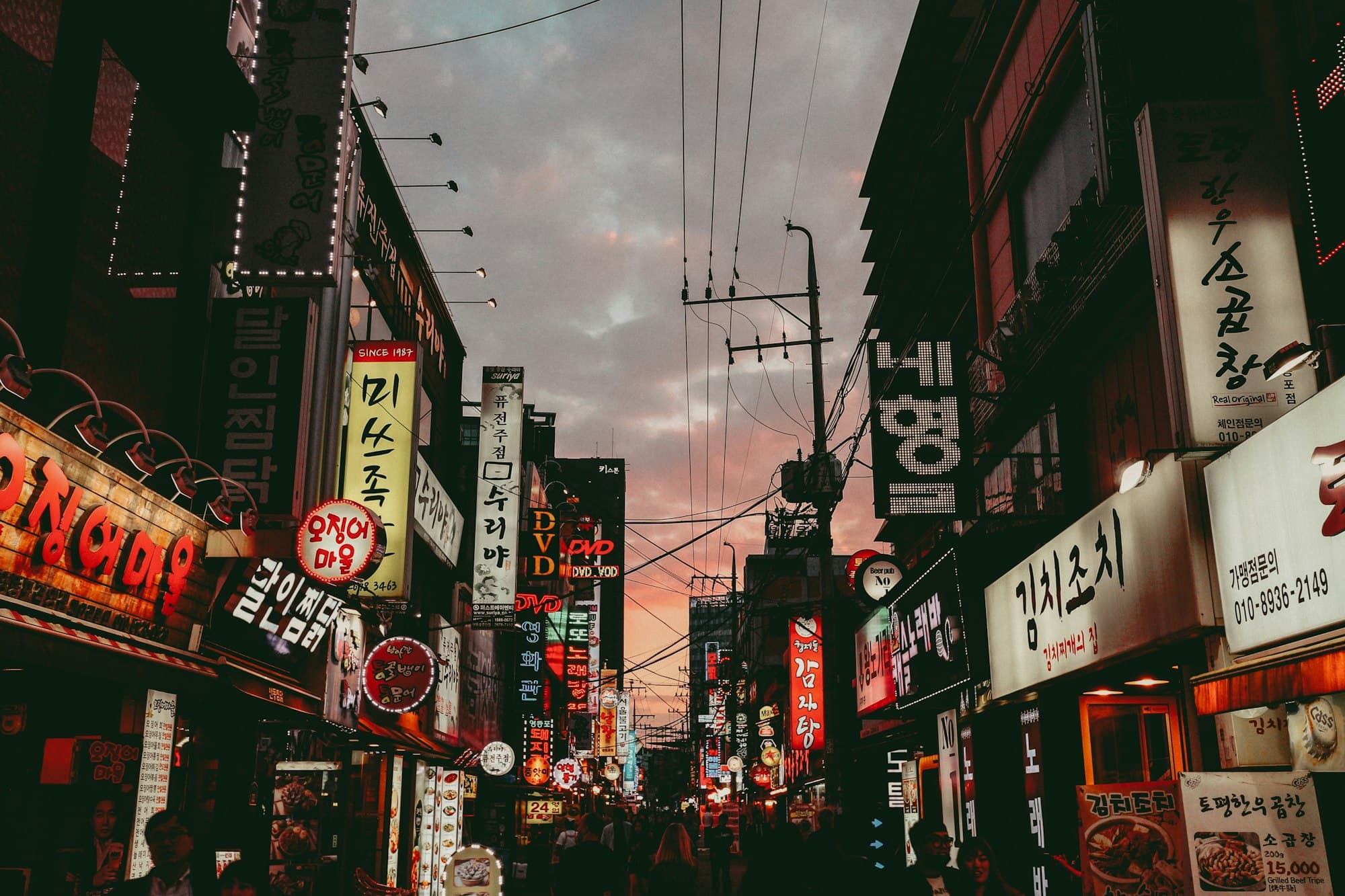
South Korea has surged into the global spotlight on the back of K-pop, Korean dramas, and a food scene that's taken the world by storm — but the country itself is even more rewarding than its cultural exports suggest. Hyper-modern Seoul, with its palaces nestled among glass towers, gives way quickly to misty mountains, ancient temples, coastal cities, and the volcanic island of Jeju.
It's a remarkably easy country to travel: spotless, safe, with world-class public transport and fast Wi-Fi everywhere. Seoul anchors most trips, but the historic city of Gyeongju, the beaches and seafood of Busan, and the natural beauty of Jeju and the national parks reward anyone who ventures beyond the capital.
Best Time to Visit South Korea
Korea has four distinct seasons, and spring and autumn are clearly the best for visiting — mild, dry, and spectacularly scenic with cherry blossoms or autumn foliage. Summer is hot, humid, and wet; winter is cold but great for skiing and festivals.
See the full South Korea best-time guide, month by month →
Cherry blossoms sweep the country in early-to-mid April, followed by mild, comfortable weather. One of the most beautiful and popular times to visit.
Hot and very humid, with a rainy monsoon season (jangma) in July. Lively beach season in Busan and Jeju, but the cities can be sticky and uncomfortable.
Crisp, clear, and stunning, as the mountains and palaces blaze with autumn colour. Comfortable temperatures and arguably the best all-round season.
Cold and dry, with good skiing near Seoul and atmospheric snowy palaces. Bundle up — it gets genuinely cold — but crowds are thin and prices lower.
South Korea Weather by Month
Figures for Seoul. Four distinct seasons; a monsoon (Jangma) falls in July; spring and autumn are ideal.
| Month | Avg High | Conditions |
|---|---|---|
| Jan | 2°C / 36°F | Cold |
| Feb | 5°C / 41°F | Cold |
| Mar | 11°C / 52°F | Spring |
| Apr | 19°C / 66°F | Mild/Peak |
| May | 24°C / 75°F | Mild |
| Jun | 28°C / 82°F | Warm |
| Jul | 29°C / 84°F | Monsoon |
| Aug | 30°C / 86°F | Hot/Humid |
| Sep | 26°C / 79°F | Warm/Peak |
| Oct | 20°C / 68°F | Autumn |
| Nov | 12°C / 54°F | Cool |
| Dec | 4°C / 39°F | Cold |
Seoul's Palaces & Neighbourhoods
Grand Gyeongbokgung Palace with its changing-of-the-guard, the traditional hanok houses of Bukchon, the youthful energy of Hongdae, and the views from Namsan Tower. Seoul rewards days of exploring.
Korean Food Culture
Korean barbecue, bubbling stews, endless banchan side dishes, fried chicken and beer (chimaek), and the legendary street-food markets like Gwangjang. Eating is a central joy of any Korea trip.
Busan
Korea's laid-back coastal city — colourful Gamcheon Culture Village, the vast Jagalchi fish market, temples perched over the sea at Haedong Yonggungsa, and summer beaches.
Gyeongju
The "museum without walls" — the ancient Silla capital, scattered with royal burial mounds, temples, and the beautiful Bulguksa Temple and Seokguram Grotto.
Jeju Island
A volcanic island of crater hikes, lava tubes, waterfalls, and beaches — Korea's favourite holiday escape, reached by one of the world's busiest flight routes.
🏨 Find Hotels in Seoul, South Korea
Compare 2M+ properties on Booking.com — free cancellation on most stays. Filter by price, neighborhood, and traveler ratings.
Search Hotels in Seoul, South Korea →Affiliate link — we may earn a small commission at no extra cost to you.
🎟️ Book Top Experiences in Seoul
Skip-the-line tickets, day trips, and guided tours — Viator lists experiences worldwide, with free cancellation on most bookings.
Browse Tours on Viator →Affiliate link — we may earn a small commission at no extra cost to you.
Where to Stay in South Korea
Choosing the right base shapes your whole trip. Here are the best areas for different travel styles:
Seoul — Myeongdong / Hongdae · First-timers, shopping, nightlife
Myeongdong is central and great for shopping and access; Hongdae offers youthful energy and nightlife. Both are well connected by the excellent metro.
Seoul — Insadong / Bukchon · Traditional atmosphere, palaces
Stay near the palace district to be among hanok houses, tea shops, and the major historic sights, with a calmer feel than the shopping districts.
Busan — Haeundae · Beaches, coastal city
The beachfront district of Korea's second city, with sand, seafood, and a relaxed holiday vibe — a great contrast to Seoul.
Jeju Island · Nature, relaxation
Base yourself near Jeju City or Seogwipo to explore the island's volcanic landscapes, coast, and waterfalls over a few days.
Getting to South Korea
Most international visitors arrive at South Korea's main gateway (ICN). Flight times vary widely depending on where you're travelling from — a few hours from neighbouring countries, or the better part of a day from across the world. The fastest way to plan your journey is to check the exact flight time and compare fares from your home airport.
Getting Around South Korea
- The KTX high-speed train whisks you across the country — Seoul to Busan in under three hours. It's comfortable, punctual, and the best way to travel between major cities.
- Seoul's metro is one of the world's best — clean, cheap, extensive, and fully signed in English. A rechargeable T-money card works on metros and buses nationwide.
- For Jeju, you'll fly (a very short, very frequent hop from Seoul or Busan) and then rent a car or use buses, as the island's sights are spread out.
- Taxis are affordable and the Kakao T app (Korea's ride-hailing standard) makes hailing easy without language barriers. Download it on arrival.
South Korea Travel Budget
Korea is moderately priced — cheaper than Japan in many respects, with excellent-value food and transport. Accommodation in Seoul is the main variable.
Guesthouses and hostels, street food and casual Korean restaurants, the cheap and superb metro, and many free palaces and parks.
Comfortable hotels, Korean barbecue and restaurant meals, KTX intercity travel, and paid attractions and experiences.
High-end hotels, fine dining and premium barbecue, private guides, and experiences like a Jeju resort stay.
Essential South Korea Travel Tips
Get a T-money card immediately
Buy a rechargeable T-money card at any convenience store or metro station on arrival. It works on virtually all public transport nationwide and saves fumbling for fares.
Download the right apps
Google Maps is limited in Korea for navigation; use Naver Map or Kakao Map instead. Get Kakao T for taxis and Papago for translation — all far more useful locally than Western defaults.
Try a hanbok palace visit
Renting traditional hanbok dress near Gyeongbokgung lets you enter the palaces free of charge and makes for memorable photos. Rental shops cluster around the palace gates.
Stay connected with an eSIM
Korea is one of the most connected countries on Earth, and you'll want in on it for maps and apps. An eSIM activated before arrival gives instant fast data.
📶 Need Mobile Data While Traveling?
Activate an international eSIM in minutes, skip expensive roaming fees, and stay connected the moment you land — no physical SIM card needed.
Get a Travel eSIM with Yesim →Affiliate link — we may earn a small commission at no extra cost to you.
Plan your trip to South Korea
Flying into South Korea
Frequently Asked Questions
What is the best time to visit South Korea?
Spring (April–May) and autumn (September–November) are the best times, offering mild, dry weather and spectacular scenery — cherry blossoms in spring and brilliant foliage in autumn. Summer is hot, humid, and wet, while winter is cold but good for skiing and quieter sightseeing.
How many days do you need in South Korea?
Eight to twelve days works well — around 4–5 days in Seoul, a couple in Busan, and time for Gyeongju or Jeju Island. The fast KTX train makes covering the country easy, so even a shorter trip can combine Seoul with one other region.
Is South Korea expensive?
Korea is moderately priced and often cheaper than Japan. Food and public transport offer excellent value, with great meals available inexpensively. Accommodation in Seoul is the main cost variable. Budget travelers manage on around ₩50,000–80,000 per day.
Do people speak English in South Korea?
English is reasonably common in Seoul's tourist areas, on the metro, and among younger people, but limited elsewhere. Signage in cities often includes English. A translation app like Papago bridges the gap and learning a few Korean phrases is appreciated.
Is South Korea easy to get around?
Very. The KTX high-speed train connects major cities (Seoul to Busan in under three hours), Seoul's metro is world-class and English-signed, and a T-money card covers transport nationwide. It's one of the easiest and most efficient countries to travel in.