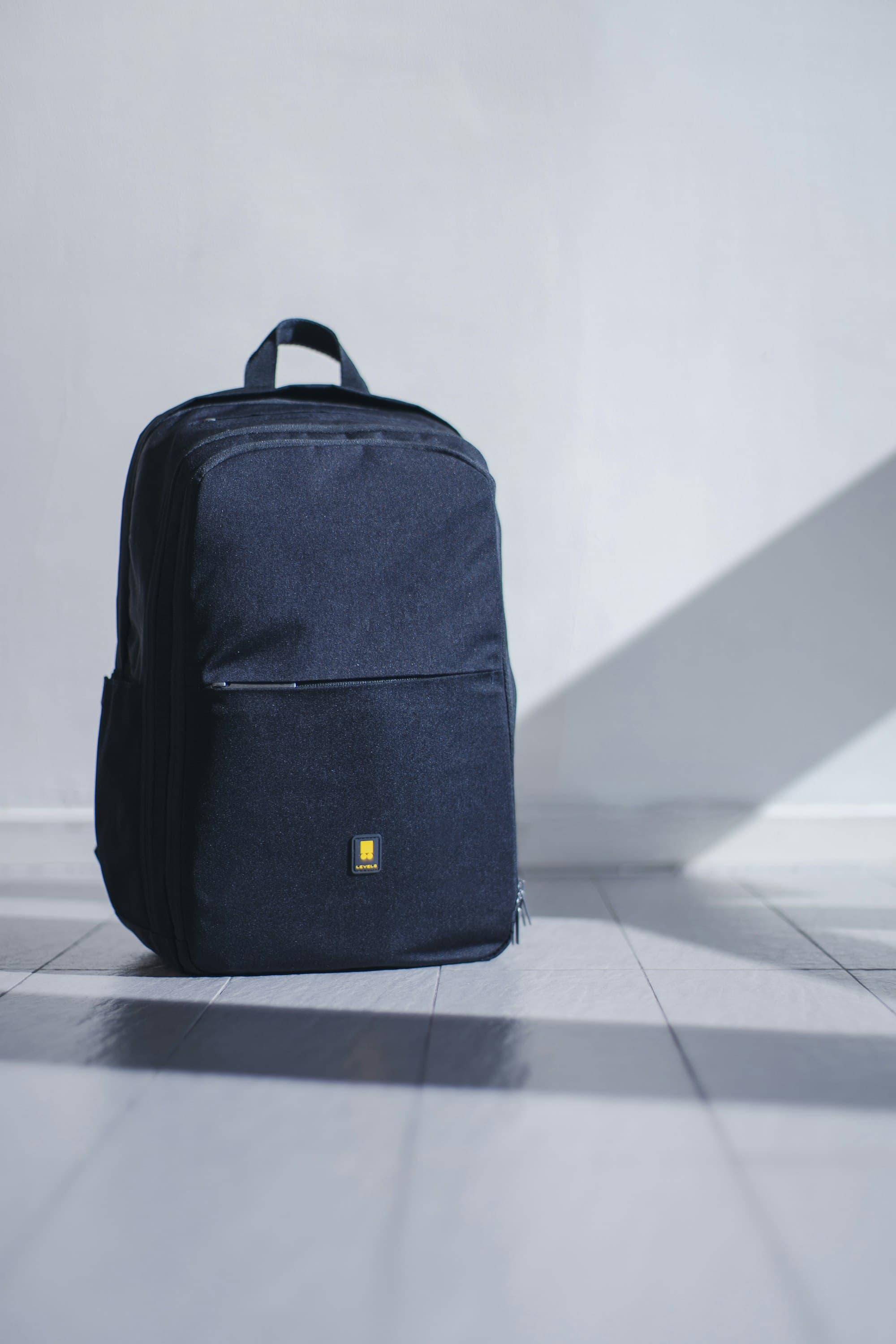
The Osprey Farpoint 40 remains the gold standard for one-bag travel backpacks — not because it is cheap or flashy, but because it solves the actual problem. It fits carry-on limits, opens like a suitcase, carries comfortably on a real harness, and is backed by a lifetime guarantee that cheaper alternatives cannot match. For anyone serious about skipping the check-in queue permanently, this is the pack to own.
Check Price on Amazon →We may earn a commission at no extra cost to you.
There is a specific frustration that frequent travelers know well: you buy a cheap travel backpack, it works for two trips, then a zipper fails or the shoulder straps start to dig in after twenty minutes. You go back to checking luggage. The Osprey Farpoint 40 was built as the answer to that cycle.
At 40 litres with a genuine adjustable harness, a clamshell opening, a stowable hip belt, and Osprey's All Mighty lifetime guarantee, it is designed to be the last travel backpack you buy. Based on published specifications, 1,000+ verified buyer reviews, and editorial analysis, here is an honest assessment of whether it delivers on that promise — and for whom.
👍 Pros
- ✓Fits carry-on limits for most full-service airlines — Delta, United, British Airways, Lufthansa, and more
- ✓Clamshell (suitcase-style) front-panel opening gives full access to the main compartment without digging
- ✓Adjustable harness and padded hip belt stow completely — no dangling straps at check-in
- ✓16-inch laptop sleeve accessible via a zip at the back, independent of the main compartment
- ✓External toiletry pocket opens flat for airport security screening without unpacking anything
- ✓450D recycled polyester (Bluesign-certified) survives years of overhead bins, train racks, and bus holds
- ✓Osprey All Mighty Guarantee: lifetime coverage — repair or replacement if anything fails
- ✓Adjustable torso fit accommodates multiple body sizes from one bag
👎 Cons
- ✕No external water bottle pocket on the main body — a genuine gap for active use days
- ✕Single large main compartment requires packing cubes for organisation (sold separately)
- ✕Budget airline personal-item limits (Spirit, Frontier, Ryanair) may require packing down to a smaller bag
- ✕Hip belt maximum is 50-inch waist — may not fit larger frames at full adjustment
Specifications
| Capacity | 40 litres |
| Weight | 3.49 lbs (1.58 kg) |
| Dimensions | 21.7" × 13.8" × 9.1" (55 × 35 × 23 cm) |
| Laptop sleeve | Up to 16 inches |
| Material | 450D recycled polyester (Bluesign / Climate Pledge Friendly) |
| Compartments | 2 main sections + 8 organisation pockets |
| Opening style | Clamshell front-panel zip |
| Water resistance | Water-resistant coating (not waterproof) |
| Hip belt max | 50-inch waist |
| Warranty | Osprey All Mighty Guarantee (lifetime) |
| Colors | Black, Gopher Green, Muted Space Blue, Tunnel Vision Grey |
Will It Actually Fit in the Overhead Bin?
The question every prospective buyer asks, and it deserves a straight answer. At 55 × 35 × 23 cm the Farpoint 40 meets carry-on size limits for most full-service international carriers — Delta, United, American, British Airways, Lufthansa, Emirates, and similar airlines. For the vast majority of trips on these carriers, it boards as carry-on without issue.
Budget carriers are a different calculation. Spirit, Frontier, and Allegiant allow only 18 × 14 × 8-inch personal items free of charge. Ryanair and EasyJet enforce strict carry-on weight limits. The Farpoint exceeds both. If your travel is primarily on these carriers, either pay for the carry-on allocation or consider a dedicated personal-item backpack.
For the traveler who flies on full-service carriers or who budgets for carry-on fees on budget airlines, the Farpoint 40 is a legitimate carry-on replacement for checked luggage on trips of up to two weeks. That is its design intent, and it delivers on it.
Can You Really Pack 10 Days Into 40 Litres?
Yes — with two conditions. First, you pack with intention rather than throwing in "just in case" items. Second, you use packing cubes. The Farpoint's single main compartment is generous in volume but structureless without organisation aids. Packing cubes divide the space into logical zones (tops, bottoms, underwear, accessories) and compress clothes enough to create meaningful extra room.
A realistic 10-day packing list for the Farpoint: 5 shirts or tops, 3 bottoms (trousers or skirts), 7 sets of underwear and socks, one light jacket or layer, one pair of shoes (worn on travel days), toiletries in the external pocket, laptop in the rear sleeve, and chargers and accessories in the front pocket. This leaves usable space for a book, a packable day bag, or souvenirs on the return.
The companion Osprey Farpoint/Fairview Daypack attaches directly to the Farpoint's front panel and adds 10–15L of additional capacity for day trips without requiring a separate bag — a useful option for travelers who want the one-bag option plus a detachable day bag for excursions.
The Harness: Why It Separates the Farpoint from Cheap Travel Packs
Most travel backpacks in the $50–80 range have padded straps in the same sense that a pool noodle is padded — technically true, functionally inadequate after any meaningful distance. The Osprey harness is a different class of system.
The adjustable torso-length harness distributes weight between the shoulders and hips rather than dumping it all on the shoulders. The hip belt (which stows completely flat behind a zip panel when not needed) takes 30–40% of the load off the upper body. The back panel has enough structure to keep the bag from collapsing against your spine. The result is a pack you can carry for an hour between transit connections without arriving at your accommodation exhausted.
The stowaway feature matters as much as the comfort. When you walk into a hotel, board a flight, or hand the bag to a driver, the straps and hip belt are invisible inside a zip compartment. The bag presents as luggage, not hiking gear. For business travelers or anyone staying in urban accommodation, this is a genuine practical advantage over packs that display their harness constantly.
Organisation: The Real Limitation (and the Workaround)
The Farpoint's main compartment is effectively one large open clamshell with a divider that creates a front-panel pocket. It is not internally segmented the way some travel bags are. On its own, clothes and accessories tumble together. This is the most common complaint in verified buyer reviews and it is legitimate.
The practical workaround is packing cubes — and most experienced one-bag travelers use them regardless of the pack. With a set of three to four packing cubes, the Farpoint's main compartment becomes as organised as any compartmentalised bag. The eight smaller pockets handle accessories, documents, and the laptop sleeve takes a 16-inch device accessible without opening the main section.
What the Farpoint does well beyond the main compartment: the external toiletry pocket opens flat like a book and sits between you and the body panel, meaning airport security access is instant. The laptop sleeve is at the back of the main compartment with a dedicated rear zip — no rummaging through clothes to reach a device.
Durability in Practice: What 3 Years of Travel Actually Does to This Pack
Verified long-term owners consistently report the same things: zippers run smoothly after years of use, the 450D polyester shows surface scuffs but does not degrade structurally, and the harness padding retains its form through extended use. This is Bluesign-certified fabric — a third-party standard for responsible manufacturing that also indicates higher material quality than unverified alternatives.
The All Mighty Guarantee is not marketing language. Osprey repairs bags with component failures — broken zippers, torn seams, failed buckles — at no charge, and replaces packs with irreparable damage. Several long-term owners report having straps replaced and zippers serviced under the guarantee years into ownership. For a bag you will use on every trip, this changes the cost calculation over a 5–10 year horizon.
Farpoint 40 vs Cheaper Alternatives: What You Actually Give Up
There is a category of $40–70 travel backpacks that looks similar to the Farpoint on a spec sheet — 40L, laptop sleeve, clamshell opening. The differences are in the components that are hardest to photograph: harness quality, material density, zipper grade, and stitching.
In practice: cheaper packs dig into shoulders under a full load, have zippers that stiffen or fail after a year of regular use, and are made from thinner polyester that abrades at contact points (overhead bin rails, concrete floors) faster. They also come without a meaningful warranty. The Farpoint costs more upfront. Divided across five or more years of regular use — and accounting for not replacing cheaper bags every 18–24 months — it is typically the more economical choice.
The relevant comparison within the Osprey range is the Osprey Daylite Plus 44L, which has lockable zippers and a luggage pass-through strap, making it more appropriate for urban business travel. The Farpoint is better for mixed trips where you also carry the pack for meaningful distances.
Who it's best for
One-bag travelers taking trips of 5 to 14 days, business travelers who add day hikes or exploration, and anyone who wants to stop paying checked-luggage fees on full-service airlines. Also well-suited to gap year travelers and long-haul backpackers who want a single bag that functions in both airports and in the field.
Frequently Asked Questions
Is the Osprey Farpoint 40 carry-on legal on Delta, United, and British Airways?
Yes — at 55 × 35 × 23 cm (21.7 × 13.8 × 9.1 inches) it meets carry-on size limits for most full-service international carriers including Delta, United, American Airlines, British Airways, Lufthansa, and Emirates. Always confirm with your specific airline before travel, particularly if flying budget carriers.
Is 40 litres enough for a 2-week trip?
For a 2-week trip with disciplined packing, yes — especially if you use packing cubes and plan to do one load of laundry during the trip. For 2 weeks without any laundry access, 40L is tight. Most experienced one-bag travelers find 40L comfortable for 7–14 days; beyond that, a 46–50L bag or a checked allowance is more practical.
What is the difference between the Osprey Farpoint and the Osprey Fairview?
The Osprey Fairview is the women's-specific version of the Farpoint. It has the same capacity and features but with a harness, back panel, and hip belt shaped to fit a narrower shoulder width and shorter torso. The Fairview comes in different colours and slightly adjusted dimensions. Both are equally capable packs — the choice is purely about which harness fits your body better.
Can I use the Osprey Farpoint 40 for hiking?
Yes, with appropriate expectations. The Farpoint's harness is comfortable and adjustable, and the hip belt transfers weight effectively. For day hikes and multi-day walks with moderate terrain, it performs well. It is not designed for technical mountaineering or routes that require a technical fit. For those use cases, a dedicated hiking pack is more appropriate.
Does the Osprey Farpoint 40 come with a rain cover?
No — a rain cover is not included. The 450D polyester fabric has a water-resistant coating that handles light rain and drizzle without soaking through, but it is not waterproof. For sustained rain exposure, Osprey makes a compatible rain cover sold separately, or you can use a pack liner inside the main compartment to protect contents.
Do I need packing cubes with the Farpoint 40?
Not strictly required, but strongly recommended. The main compartment is one large clamshell without internal divisions. Without packing cubes, clothes and accessories mix together and become hard to access mid-trip. With three to four packing cubes, the same space becomes fully organised and packing on a return or mid-trip repack takes minutes rather than a full reorganisation.