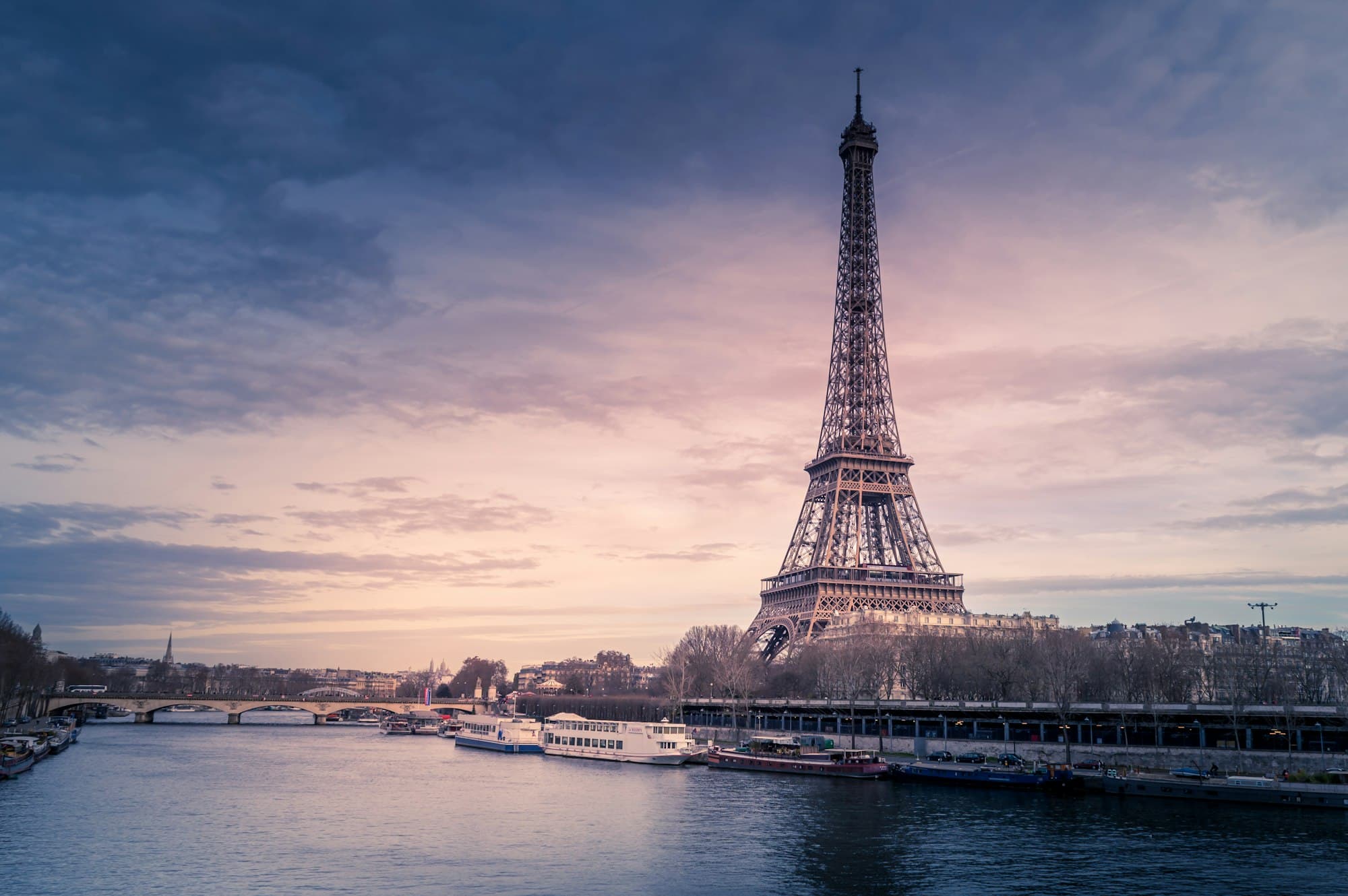
France is the world's most visited country for reasons that become obvious within hours of arrival — a landscape of extraordinary variety, a 2,000-year accumulated culture, and a quality of everyday life that has influenced civilizations on every continent. Paris alone could justify the visit: the most concentrated collection of museums, architecture, food, and cultural institutions of any city on Earth.
But France beyond Paris is equally compelling. Normandy's D-Day beaches and medieval Mont-Saint-Michel. The Loire Valley's château-lined river. Burgundy and Bordeaux's wine estates. The limestone perched villages of the Dordogne. The lavender fields of Provence. The Riviera's azure coast. France rewards both the week-long city break and the month-long ramble through its regions.
Best Time to Visit France
France has a highly regional climate, but for most visitors targeting Paris and major attractions, spring and early autumn are ideal — mild temperatures, beautiful light, and manageable crowds before the July–August peak. The Riviera is best May–June and September.
Paris in blossom, Provence awakening, Loire Valley vivid and green. Pleasant temperatures, long days, and crowds that haven't yet reached summer intensity.
Peak crowds and prices, especially in Paris, the Riviera, and Provence. Cities can be uncomfortably hot in July–August, but coastal and mountain regions are excellent.
Harvest season in Burgundy and Bordeaux, vendange festivals, golden Dordogne light, and Paris at its most atmospheric. September is particularly glorious.
Paris in winter is romantic and crowd-free, with excellent Christmas markets in Alsace. The Alps offer world-class skiing; the south is mild and quiet.
France Weather by Month
Figures for Paris. Temperate climate; late spring and early autumn offer the best balance of weather and crowds.
| Month | Avg High | Conditions |
|---|---|---|
| Jan | 7°C / 45°F | Cold |
| Feb | 8°C / 46°F | Cold |
| Mar | 12°C / 54°F | Spring |
| Apr | 15°C / 59°F | Mild |
| May | 19°C / 66°F | Mild/Peak |
| Jun | 22°C / 72°F | Warm |
| Jul | 25°C / 77°F | Hot/Peak |
| Aug | 25°C / 77°F | Hot/Peak |
| Sep | 21°C / 70°F | Mild |
| Oct | 16°C / 61°F | Autumn |
| Nov | 10°C / 50°F | Cool |
| Dec | 8°C / 46°F | Cold |
Paris
The Louvre, Eiffel Tower, Musée d'Orsay, Notre-Dame (now reopened), Montmartre, the Seine, and the world's best café culture. Allow at least 4 days — the city is inexhaustible.
Normandy & Mont-Saint-Michel
The D-Day beaches and American Cemetery are profoundly moving; the tidal island monastery of Mont-Saint-Michel is one of the world's great sights.
Loire Valley
UNESCO World Heritage châteaux strung along the Loire River — Chambord, Chenonceau, and Villandry are the most spectacular. Best explored by bicycle through the vineyards.
Provence & the French Riviera
Lavender fields, Roman ruins (the Pont du Gard, the Arènes d'Arles), the perched village of Les Baux, and the glittering coast from Nice to Menton.
Dordogne & Périgord
Medieval castle country — honey-stone bastide towns, prehistoric cave art at Lascaux, foie gras and truffle markets, and some of France's most beautiful rural landscape.
Burgundy & Bordeaux Wine Regions
Two of the world's most celebrated wine regions — Burgundy's Côte d'Or produces Pinot Noir and Chardonnay of unparalleled finesse; Bordeaux's châteaux are more formal and grand.
🏨 Find Hotels in France
Compare 2M+ properties on Booking.com — free cancellation on most stays. Filter by price, neighborhood, and traveler ratings.
Search Hotels in France →Affiliate link — we may earn a small commission at no extra cost to you.
🎟️ Book Top Experiences in Paris
Skip-the-line tickets, day trips, and guided tours — Viator lists experiences worldwide, with free cancellation on most bookings.
Browse Tours on Viator →Affiliate link — we may earn a small commission at no extra cost to you.
Where to Stay in France
Choosing the right base shapes your whole trip. Here are the best areas for different travel styles:
Paris — Le Marais / Saint-Germain · First-timers, culture, walking
Le Marais for boutique hotels in historic buildings and walking distance to the major sights; Saint-Germain for the classic Left Bank intellectual atmosphere.
Provence — Aix-en-Provence or a village gîte · Wine country, countryside immersion
Aix is an elegant base for Provence; renting a gîte (country house) in the Luberon gives the full slow-France experience.
Loire Valley — Amboise or Tours · Château circuit, cycling base
Amboise puts you within cycling distance of Château de Chambord and Clos Lucé (Leonardo da Vinci's final home). Tours is a larger city with excellent transport links.
Côte d'Azur — Nice or Antibes · Beach, Riviera life
Nice is the Riviera's most accessible hub with a vibrant old town, excellent markets, and good rail connections. Antibes is smaller and more charming.
Getting to France
Most international visitors arrive at France's main gateway (CDG). Flight times vary widely depending on where you're travelling from — a few hours from neighbouring countries, or the better part of a day from across the world. The fastest way to plan your journey is to check the exact flight time and compare fares from your home airport.
Getting Around France
- France's TGV high-speed train network is excellent and connects Paris to every major city quickly — Lyon in 2 hours, Marseille in 3, Bordeaux in 2, Nice in 5.5. Book in advance (SNCF website or Trainline) for the best fares.
- Paris has one of the world's best metro systems — fast, frequent, and cheap. A carnet of 10 tickets or a Navigo weekly pass gives unlimited metro, bus, and RER travel.
- Renting a car is the best way to explore the Loire Valley, Provence, Dordogne, and Burgundy wine country. French country roads are excellent and scenic.
- For the Riviera, the coastal train between Nice and Monaco is cheap, frequent, and spectacular. The ferries to Corsica run from Nice, Toulon, and Marseille.
France Travel Budget
France can be travelled on a range of budgets, but it's not cheap — particularly Paris and the Riviera. The key to budget travel in France is eating well at lunch (formules du midi), shopping at markets, and staying in chambres d'hôtes (B&Bs) rather than hotels.
Hostels, budget hotels, boulangerie breakfast, market lunch, simple bistro dinner. Still eat very well.
Comfortable hotels, sit-down restaurant meals with wine, guided tours, TGV travel.
Boutique and château hotels, Michelin-starred dining, private wine tours, and bespoke château visits.
Essential France Travel Tips
Learn basic French pleasantries — it matters
Starting every interaction with "Bonjour" and ending with "Merci, bonne journée" will transform your experience. The French aren't rude — they respond to politeness with warmth.
Eat lunch as your main meal
The best French restaurants offer a set formule du midi (typically €15–25 for 2–3 courses) at lunchtime. The same meal at dinner costs 40–60% more. Eating a proper lunch and a lighter dinner is both economical and very French.
The Paris Museum Pass is excellent value
A 2, 4, or 6-day Paris Museum Pass covers 50+ museums including the Louvre, Versailles, Orsay, and Pompidou — and crucially, lets you skip the ticket queues at most sites.
Shop at the marchés
Every French town has a weekly open-air market (marché). Browsing and buying at a marché — cheese, charcuterie, bread, fruit — is one of the great French experiences and far cheaper than restaurants.
📶 Need Mobile Data While Traveling?
Activate an international eSIM in minutes, skip expensive roaming fees, and stay connected the moment you land — no physical SIM card needed.
Get a Travel eSIM with Yesim →Affiliate link — we may earn a small commission at no extra cost to you.
Plan your trip to France
Flying into France
Entry & visas
Frequently Asked Questions
What is the best time to visit France?
April through June and September through October are ideal for most of France — mild weather, manageable crowds, and the countryside at its most beautiful. Paris in autumn is particularly atmospheric. July–August is hot and busy everywhere; the Riviera is most crowded but coastal areas are still excellent.
How many days do you need in France?
A first trip typically gives Paris 4–5 days and one other region (Normandy, Loire Valley, or Provence) 3–4 days. Two weeks lets you pair Paris with a comprehensive regional exploration. France's rail network makes it easy to build a multi-destination itinerary.
Is France safe for tourists?
France is very safe for tourists. Pickpocketing is the main risk, particularly on the Paris Metro and around major tourist sites. Keep valuables secured and be aware of your surroundings in crowded areas. The Côte d'Azur and countryside are notably relaxed.
What should I eat in France?
Regional specialities are the rule: steak tartare and crêpes in Paris, moules marinières in Normandy, cassoulet in the southwest, bouillabaisse in Marseille, salade niçoise on the Riviera, and raclette in the Alps. The boulangerie croissant, eaten at the counter each morning, is the most repeatable pleasure in France.