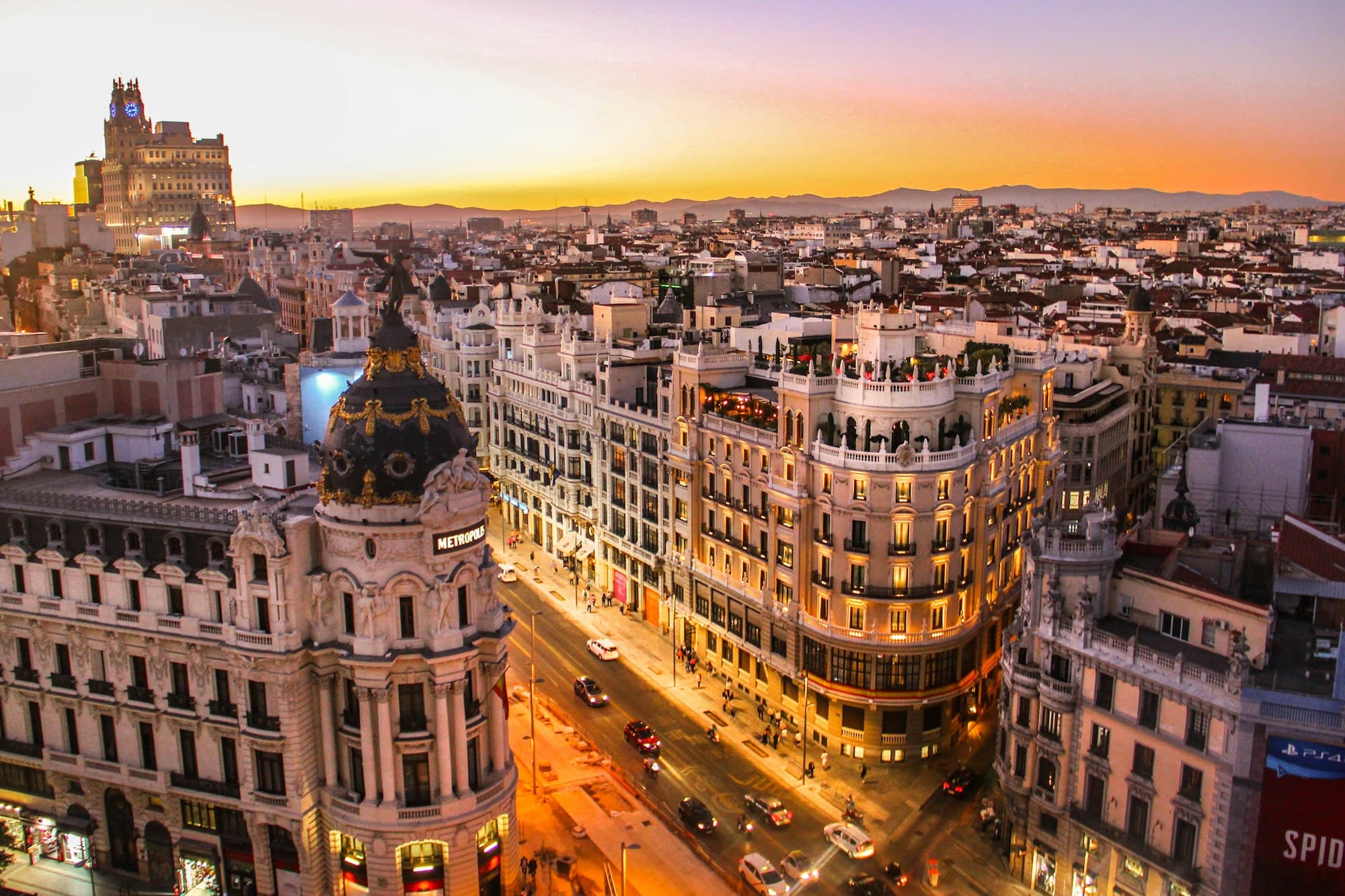
Spain has an embarrassment of riches — the architectural genius of Gaudí in Barcelona, the Moorish splendour of the Alhambra in Granada, the Prado's incomparable art collection in Madrid, the ancient pilgrimage route of the Camino de Santiago, and a coastline that includes some of Europe's finest beaches. It's also one of Europe's most food-obsessed countries, from Basque pintxos bars to Madrid's all-night restaurant culture.
Spain rewards the traveller who goes beyond the obvious trinity of Barcelona–Madrid–Granada. The white hill towns of Andalusia, the rugged green north of Galicia and Asturias, the Ribera del Duero wine country, the medieval streets of Toledo and Salamanca, and the dramatic landscape of the Canary Islands all add depth to what could easily become a long relationship with the country.
Best Time to Visit Spain
Spain has markedly different climates by region. For the most popular destinations (Barcelona, Madrid, Andalusia), spring and early autumn are ideal — warm but not the scorching heat of July–August. The Canary Islands are excellent year-round.
See the full Spain best-time guide, month by month →
Mild temperatures everywhere, wildflowers in Andalusia and the interior, vibrant festivals (Semana Santa and Feria in Seville), and manageable crowds.
Seville and Córdoba exceed 40°C regularly — brutally hot for sightseeing. Coastal areas are busy and expensive. The north (San Sebastián, Galicia) is perfectly pleasant.
Perhaps the best time overall — summer heat fades, prices drop, La Rioja and Ribera del Duero begin vendimia (harvest) season, and the light is beautiful.
Southern Andalusia stays mild (15–18°C) even in winter. Madrid and Barcelona are cool but crowd-free. The Canary Islands are Europe's best winter sun escape.
Spain Weather by Month
Figures for Madrid. Hot, dry summers and cool winters; coastal and southern regions are milder year-round.
| Month | Avg High | Conditions |
|---|---|---|
| Jan | 10°C / 50°F | Cool |
| Feb | 13°C / 55°F | Cool |
| Mar | 17°C / 63°F | Spring |
| Apr | 18°C / 64°F | Mild/Peak |
| May | 23°C / 73°F | Warm |
| Jun | 30°C / 86°F | Hot |
| Jul | 33°C / 91°F | Very Hot |
| Aug | 32°C / 90°F | Very Hot |
| Sep | 27°C / 81°F | Warm/Peak |
| Oct | 19°C / 66°F | Mild |
| Nov | 13°C / 55°F | Cool |
| Dec | 10°C / 50°F | Cool |
Barcelona & Gaudí's Architecture
The Sagrada Família, Park Güell, Casa Batlló, and Casa Milà represent the world's most concentrated collection of a single architect's genius. Add the Gothic Quarter, the Barceloneta beach, and one of Europe's great food cities.
Madrid — Prado, Museums & Nightlife
The Prado's collection of Velázquez, Goya, and El Greco is world-class; the Reina Sofía has Picasso's Guernica. Madrid's nightlife doesn't begin until midnight — the city's energy is genuinely exceptional.
The Alhambra, Granada
The Nasrid Palaces of the Alhambra — intricate stucco work, muqarnas ceilings, reflecting pools, and views of the snow-capped Sierra Nevada — are among the most beautiful things in Europe. Book months ahead.
Seville — Flamenco & Baroque
Spain's most theatrical city: the Gothic Cathedral (the largest in the world), the Alcázar palace, and a flamenco culture that is absolutely authentic. Semana Santa here is extraordinary.
San Sebastián & Basque Country
The city with more Michelin stars per capita than anywhere on Earth, fronted by the perfect crescent of La Concha beach. Pintxos bars on the Parte Vieja are the world's finest bar food.
Camino de Santiago
The 780km walk from St Jean Pied de Port to Santiago de Compostela is one of the world's great walking journeys. Even a week on the Camino Francés, finishing in Santiago, is transformative.
🏨 Find Hotels in Spain
Compare 2M+ properties on Booking.com — free cancellation on most stays. Filter by price, neighborhood, and traveler ratings.
Search Hotels in Spain →Affiliate link — we may earn a small commission at no extra cost to you.
🎟️ Book Top Experiences in Madrid
Skip-the-line tickets, day trips, and guided tours — Viator lists experiences worldwide, with free cancellation on most bookings.
Browse Tours on Viator →Affiliate link — we may earn a small commission at no extra cost to you.
Where to Stay in Spain
Choosing the right base shapes your whole trip. Here are the best areas for different travel styles:
Barcelona — Gothic Quarter / Eixample · Gaudí access, central location
The Gothic Quarter for atmosphere; the Eixample (specifically Passeig de Gràcia) for proximity to Gaudí buildings. Avoid hotels right on La Rambla.
Madrid — Barrio de las Letras / Chueca · Culture, food, nightlife
Barrio de las Letras puts you between the Prado and the vibrant Huertas nightlife area. Chueca is the LGBTQ+ neighbourhood with the best independent restaurants.
Seville — Santa Cruz / El Arenal · Walking the old city
Santa Cruz puts you within walking distance of the Cathedral and Alcázar. El Arenal is quieter and slightly more affordable while still very central.
Andalusia — Rural cortijo · White village immersion, slowing down
Renting a cortijo (rural farmhouse) in the Sierra Nevada foothills near Granada or in the Ronda mountain country is Spain at its most timeless.
Getting to Spain
Most international visitors arrive at Spain's main gateway (MAD). Flight times vary widely depending on where you're travelling from — a few hours from neighbouring countries, or the better part of a day from across the world. The fastest way to plan your journey is to check the exact flight time and compare fares from your home airport.
Getting Around Spain
- Spain's AVE high-speed rail network is superb — Madrid to Barcelona in 2h30m, Madrid to Seville in 2h30m, Madrid to Valencia in 1h35m. Book through Renfe or Trainline; advance fares are dramatically cheaper.
- Within Barcelona and Madrid, the metro systems are excellent and cheap. Madrid's metro is one of the world's largest and most efficient.
- Renting a car is essential for Andalusia's white villages, the rural wine regions, and the northern coast of Galicia and Asturias. Driving in city centres is not recommended.
- Budget airlines (Vueling, Iberia Express, Ryanair) connect Spanish cities cheaply for routes where the train takes too long (Madrid–Santiago de Compostela, for example).
Spain Travel Budget
Spain is one of Western Europe's best value destinations — accommodation, food, and transport all cost significantly less than in France or the UK. Eating at bars for pintxos and set lunches keeps costs very low.
Hostels, budget hotels, €10–12 set lunches (menú del día), tapas at bars in the evening, city metro passes.
Comfortable hotels, restaurant dinners with wine, guided tours to the Alhambra and major sites, intercity AVE travel.
Paradors (state-owned historic hotels in castles and monasteries), fine dining, private Gaudí tours, and exclusive flamenco shows.
Essential Spain Travel Tips
Book the Alhambra months in advance
The Alhambra Nasrid Palaces sell out — particularly the evening slots. Book on the official Alhambra website (alhambra-patronato.es) as soon as your dates are confirmed. Tickets released 3 months ahead vanish within hours.
Eat on Spanish time
Lunch is 2–4pm (the main meal), dinner starts at 9pm. Eating at 6pm or 7pm in Spain gets you an empty restaurant. Embrace the schedule and eat well for less with the menú del día at lunch.
The Camino is more accessible than it looks
You don't need to walk the whole Camino Francés. The final 100km from Sarria to Santiago de Compostela takes 5–7 days and earns the official Compostela certificate.
Parador network is exceptional value
Spain's state-run Parador hotels are located in converted castles, monasteries, and historic buildings. They're affordable (€90–200/night) and often in unbeatable positions — the Granada Parador is within the Alhambra walls.
📶 Need Mobile Data While Traveling?
Activate an international eSIM in minutes, skip expensive roaming fees, and stay connected the moment you land — no physical SIM card needed.
Get a Travel eSIM with Yesim →Affiliate link — we may earn a small commission at no extra cost to you.
Plan your trip to Spain
Flying into Spain
Entry & visas
Frequently Asked Questions
What are the must-see places in Spain?
Barcelona (Gaudí's Sagrada Família and Gothic Quarter), Madrid (Prado Museum, Retiro Park, tapas), the Alhambra in Granada, and Seville's Cathedral and Alcázar are the four essential stops on a first trip. San Sebastián is a must for food lovers.
When is the best time to visit Spain?
April–June and September–October offer ideal weather across most of the country. Summer (July–August) is brutally hot in Andalusia and the centre but excellent in the north (San Sebastián, Galicia, Asturias). The Canary Islands are warm year-round.
Is Spain good for a first trip to Europe?
Excellent. Spain is welcoming, very safe, affordable, easy to navigate (excellent trains and budget flights), and offers extraordinary variety — city culture, beaches, mountains, historic sites, and world-class food within a single country.