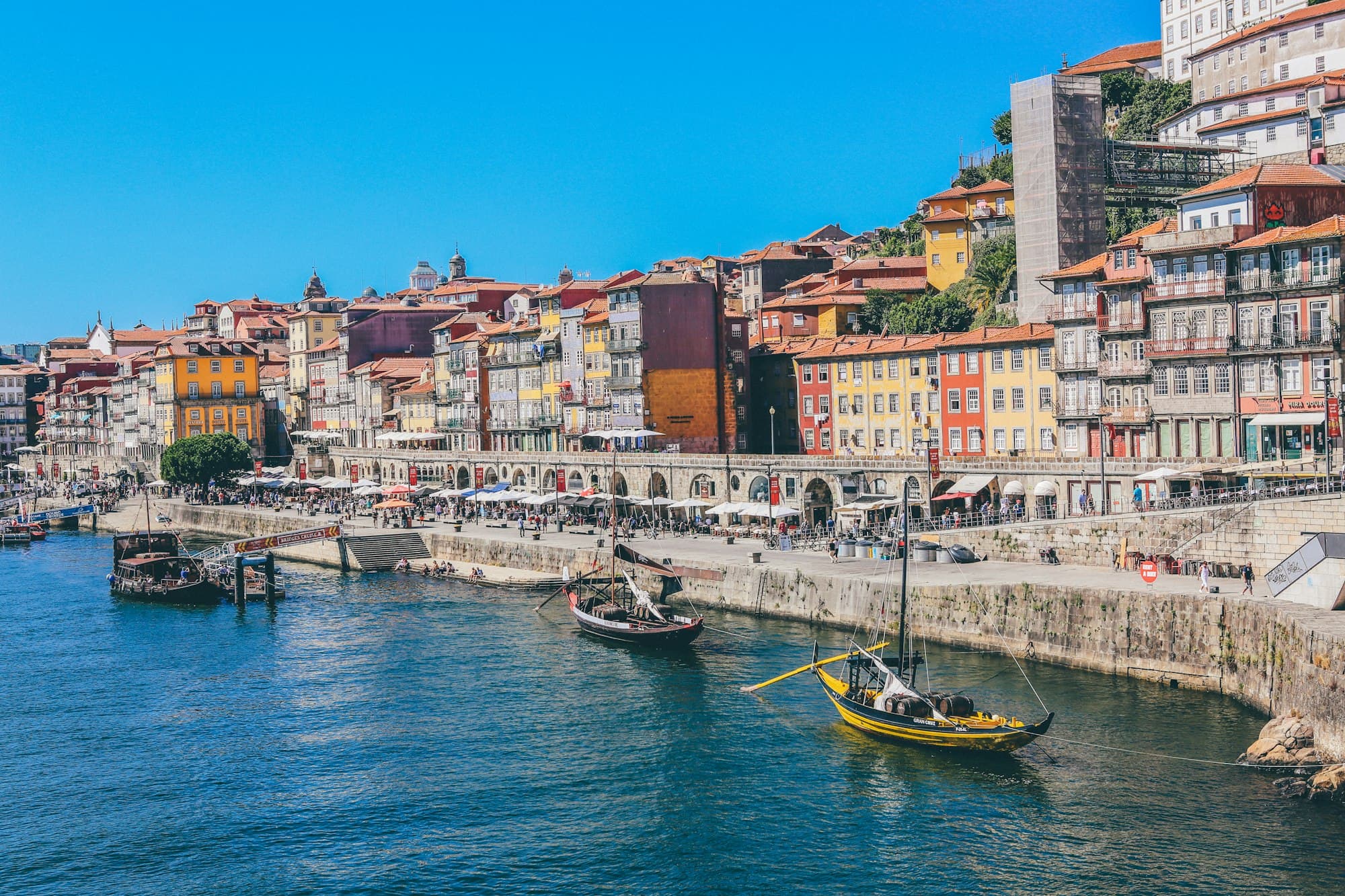
Portugal has been one of Europe's most compelling travel destinations for years and shows no sign of becoming less so. Lisbon is a city of extraordinary character — seven hills, a medieval Moorish quarter, tram lines, and a melancholy musical tradition called fado that seems to belong to the fog off the Tagus. Porto's crumbling baroque churches and port wine lodges make it one of Europe's most atmospheric cities.
Beyond the cities, Portugal has the Algarve's dramatic sea-carved cliffs and beaches, the green Douro Valley's terraced vineyards, the unspoilt Alentejo's plains of cork oaks and ancient stone villages, and the Atlantic islands of the Azores — one of Europe's last genuinely remote destinations. All of it at prices that Western Europe's more famous neighbours can't match.
Best Time to Visit Portugal
Portugal's Atlantic coast keeps temperatures reasonable even in summer, making it more pleasant year-round than Mediterranean destinations. Spring and early autumn are ideal for cities and wine country; the Algarve beaches peak July–September.
Green countryside, wildflowers in the Alentejo, comfortable temperatures for sightseeing, and far fewer tourists than summer. Arguably Portugal's best season.
Hot but the Atlantic breeze keeps things bearable. Peak beach season on the Algarve. Lisbon and Porto are busy and expensive; wine country is magnificent.
Douro Valley grape harvest, the sea still warm (20–22°C), crowds thinning, and prices dropping. September is particularly good.
Mild by European standards (12–16°C in Lisbon). Christmas markets, empty cities, and green countryside. The Algarve sees about 300 days of sunshine annually.
Portugal Weather by Month
Figures for Lisbon. Mild Mediterranean climate with warm summers and gentle winters; great much of the year.
| Month | Avg High | Conditions |
|---|---|---|
| Jan | 15°C / 59°F | Mild |
| Feb | 16°C / 61°F | Mild |
| Mar | 18°C / 64°F | Spring |
| Apr | 19°C / 66°F | Mild |
| May | 22°C / 72°F | Warm/Peak |
| Jun | 26°C / 79°F | Warm |
| Jul | 28°C / 82°F | Hot |
| Aug | 29°C / 84°F | Hot |
| Sep | 27°C / 81°F | Warm/Peak |
| Oct | 22°C / 72°F | Mild |
| Nov | 18°C / 64°F | Mild |
| Dec | 15°C / 59°F | Mild |
Lisbon
Seven hills, yellow trams, the Alfama's medieval tangle, Belém's Manueline tower and Pastéis de Belém, fado in a shadowed tasca, and the Jerónimos Monastery — one of Europe's most characterful capitals.
Porto & the Douro Valley
Porto's World Heritage azulejo-tiled facades, São Bento station's vast mural, the riverside Ribeira, and the port wine lodges of Vila Nova de Gaia. An hour east: the Douro's terraced vineyards and wine estates.
Sintra
A fairy-tale UNESCO town 30 minutes from Lisbon — palaces perched in forested mountain peaks (the Pena Palace, the Moorish Castle), a National Park, and the windswept Atlantic coast of Cabo da Roca, Europe's westernmost point.
Algarve
The south coast's limestone sea stacks and arched grottos (Praia da Marinha, Ponta da Piedade) are some of Europe's most photographed coastline. The beaches are excellent; the interior is quiet and authentic.
Alentejo
Portugal's vast interior region — cork oak forests, prehistoric megaliths, the medieval walled city of Évora (Roman temple intact), and exceptional red wines and pork dishes.
The Azores
Nine volcanic islands 1,500km into the Atlantic — geysers, crater lakes (Sete Cidades), whale watching, and a remoteness that's increasingly rare in Europe.
🏨 Find Hotels in Portugal
Compare 2M+ properties on Booking.com — free cancellation on most stays. Filter by price, neighborhood, and traveler ratings.
Search Hotels in Portugal →Affiliate link — we may earn a small commission at no extra cost to you.
🎟️ Book Top Experiences in Lisbon
Skip-the-line tickets, day trips, and guided tours — Viator lists experiences worldwide, with free cancellation on most bookings.
Browse Tours on Viator →Affiliate link — we may earn a small commission at no extra cost to you.
Where to Stay in Portugal
Choosing the right base shapes your whole trip. Here are the best areas for different travel styles:
Lisbon — Alfama / Bairro Alto · Atmosphere, fado, walking old city
Alfama for the most atmospheric setting in Lisbon's medieval heart; Bairro Alto for proximity to the best restaurants and bars.
Porto — Ribeira / Baixa · Riverside dining, wine cave access
The Ribeira waterfront is the most picturesque area; the Baixa (centre) is best for walking to most attractions.
Algarve — Lagos or Tavira · Beaches, sea caves, relaxation
Lagos is the most lively western Algarve base (best grottos access); Tavira in the east is quieter and more traditional.
Douro Valley — quinta stay · Wine immersion, river views
Many wine estates (quintas) offer accommodation — staying at a Douro quinta for 2–3 nights, with wine tastings and river views, is a quintessential Portugal experience.
Getting to Portugal
Most international visitors arrive at Portugal's main gateway (LIS). Flight times vary widely depending on where you're travelling from — a few hours from neighbouring countries, or the better part of a day from across the world. The fastest way to plan your journey is to check the exact flight time and compare fares from your home airport.
Getting Around Portugal
- Comboios de Portugal (CP) trains connect Lisbon to Porto (3 hours, Alfa Pendular express), Faro, and Évora. The Lisbon–Porto route is very well served; the south and Alentejo less so.
- Renting a car is highly recommended for anything beyond Lisbon and Porto — it's the only practical way to see the Alentejo, Douro Valley, and the interior Algarve.
- Lisbon's metro and tram network is excellent for getting around the city. The iconic Tram 28 is scenic but extremely crowded with tourists — walk the same route for a better experience.
- Budget airlines (TAP, Ryanair, easyJet) make Lisbon and Porto very accessible from across Europe. The Lisbon Metro connects directly to the airport.
Portugal Travel Budget
Portugal is one of Western Europe's best value destinations, consistently cheaper than France, the UK, or Scandinavia. Excellent food, wine, and accommodation at prices that feel like 10 years ago elsewhere.
Hostels and pensões, tascas and pastéis de nata, local wine (€2–3 a glass), bus travel.
Comfortable hotels, restaurant dinners, wine tastings, and car rental for the countryside.
Design hotels and historical pousadas, Michelin dining, private Douro river cruises.
Essential Portugal Travel Tips
Pastel de nata is not optional
The warm egg custard tart (pastel de nata), eaten at the counter with a galão coffee, is Portugal's greatest contribution to world cuisine. Pastéis de Belém in Lisbon is the original; every other bakery in the country also makes a version.
Ask for the local wine
Portugal's wine culture runs from Alentejo's rich reds and Douro's port and table wines to Minho's fizzy Vinho Verde. Ordering the "vinho da casa" (house wine) at a restaurant routinely produces something excellent for €3–5.
Lisbon hills are real
Lisbon has seven hills. The Alfama, Bairro Alto, and Graça require walking on very steep streets. Wear comfortable shoes, and use the funiculars (ascensores) when available.
Go east in the Algarve
The eastern Algarve (Tavira, Olhão, Ria Formosa Natural Park) is dramatically less developed than the western tourist strip and has some of the best seafood in Portugal.
📶 Need Mobile Data While Traveling?
Activate an international eSIM in minutes, skip expensive roaming fees, and stay connected the moment you land — no physical SIM card needed.
Get a Travel eSIM with Yesim →Affiliate link — we may earn a small commission at no extra cost to you.
Plan your trip to Portugal
Flying into Portugal
Entry & visas
Frequently Asked Questions
Is Portugal worth visiting?
Portugal is outstanding value and deeply rewarding — Lisbon and Porto are among Europe's most characterful cities, the Algarve has some of Europe's finest beaches, the Douro wine country rivals Burgundy and Tuscany, and the food and wine culture is genuinely exceptional.
How many days do you need in Portugal?
A first trip comfortably fits Lisbon (3 days) + Sintra day trip + Porto (2 days) + Douro Valley (1–2 days) in 8–10 days. Adding the Algarve or Alentejo extends to 12–14 days.
What is Portugal most famous for?
Fado music, pastel de nata (custard tarts), port wine, Cristiano Ronaldo, the Age of Discovery (Vasco da Gama, Magellan), the azulejo blue tile tradition, and the Atlantic coast beaches.