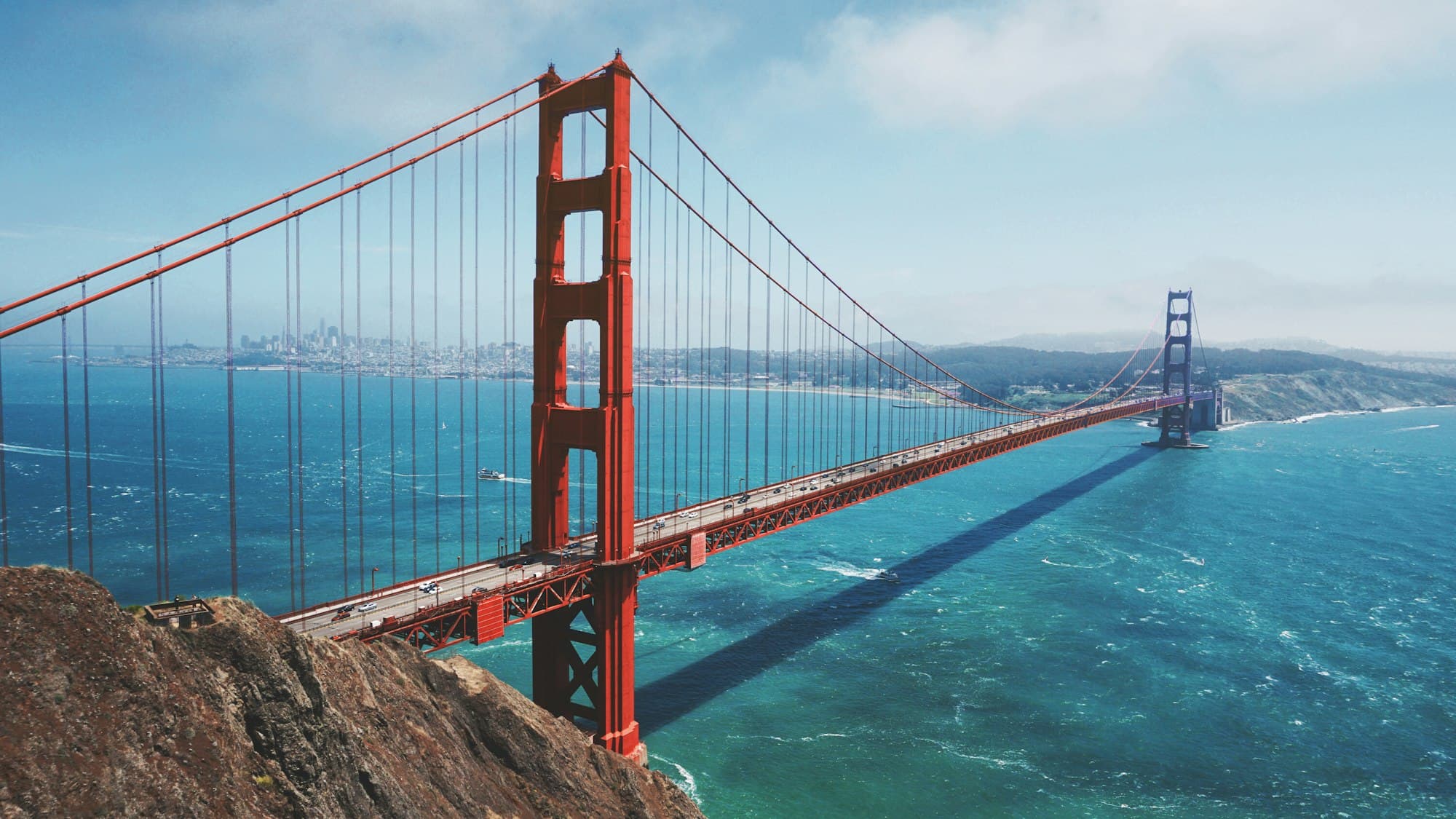
The United States is a continent's worth of landscapes, cultures, and cities packed into a single country — a place where you can eat lobster rolls in Maine, stand on the rim of the Grand Canyon, walk the French Quarter in New Orleans, hike among redwoods in California, and watch Old Faithful erupt in Yellowstone, all without leaving the country. It's the world's most-visited country for good reason: the variety is simply unmatched.
The best approach to the US is to treat it as the vast country it is — pick a region, go deep, and resist the urge to cover the coasts in a week. A focused East Coast trip (New York, Washington DC, New Orleans) or a Western road trip (LA, Las Vegas, Grand Canyon, San Francisco) delivers a richer experience than a coast-to-coast sprint.
Best Time to Visit United States
The US has enormous climatic diversity — what's ideal in one region may be terrible in another at the same time. Generally, spring and autumn are best for most regions; summer is best for the Pacific Northwest, Alaska, and the mountain states.
Cherry blossoms in Washington DC, the Great Smoky Mountains in bloom, mild temperatures in the Southwest and Pacific Coast. Best months for national parks before summer crowds.
Peak season for the Pacific Northwest, Alaska, the Rockies, and New England beaches. The Southwest is brutally hot (Grand Canyon); Florida is hurricane season. National parks are very crowded.
New England fall foliage (peak mid-October) is spectacular. The Southwest's best weather window. National parks thin out after Labor Day but remain open.
Florida and Southern California are excellent year-round. Hawaii has its best weather. The Rocky Mountain ski resorts peak. The Northeast is cold but festive.
United States Weather by Month
The US spans many climates; figures are for New York City as a reference. Always check the specific region you are visiting.
| Month | Avg High | Conditions |
|---|---|---|
| Jan | 4°C / 39°F | Cold |
| Feb | 6°C / 43°F | Cold |
| Mar | 11°C / 52°F | Spring |
| Apr | 17°C / 63°F | Mild |
| May | 22°C / 72°F | Warm/Peak |
| Jun | 27°C / 81°F | Warm |
| Jul | 29°C / 84°F | Hot |
| Aug | 28°C / 82°F | Hot |
| Sep | 25°C / 77°F | Warm/Peak |
| Oct | 18°C / 64°F | Autumn |
| Nov | 12°C / 54°F | Cool |
| Dec | 6°C / 43°F | Cold |
New York City
Central Park, the Met, Brooklyn Bridge, the High Line, Broadway, and world-class food in every direction. The city that never sleeps and rewards every visit differently — see the full Things To Do guide.
Grand Canyon & the Southwest
The Grand Canyon's scale is genuinely incomprehensible until you stand at the rim. The surrounding region — Zion, Bryce Canyon, Arches, Monument Valley, Antelope Canyon — constitutes America's greatest concentration of natural wonders.
New Orleans
America's most distinctive city — a French and Spanish colonial architectural heritage, the birthplace of jazz, the world's most vibrant Mardi Gras, and a food culture (po'boys, beignets, crawfish étouffée) like nowhere else in the country.
San Francisco & the Pacific Coast
The Golden Gate, Alcatraz, Muir Woods redwoods, and the most dramatic urban driving in America (Lombard Street). Pacific Coast Highway south to Big Sur is one of the world's great road trips.
Yellowstone & the Rocky Mountain West
The world's first national park has geysers, hot springs, grizzly bears, and herds of bison. Grand Teton next door adds jagged peaks. Denver is the gateway; Jackson Hole the premium base.
Hawaii
Five volcanic islands with the world's most varied landscapes within one American state — Oahu's Waikiki and Pearl Harbor, the Big Island's active volcano, Maui's Road to Hana, and Kauai's Na Pali Coast.
🏨 Find Hotels in United States
Compare 2M+ properties on Booking.com — free cancellation on most stays. Filter by price, neighborhood, and traveler ratings.
Search Hotels in United States →Affiliate link — we may earn a small commission at no extra cost to you.
🎟️ Book Top Experiences in New York
Skip-the-line tickets, day trips, and guided tours — Viator lists experiences worldwide, with free cancellation on most bookings.
Browse Tours on Viator →Affiliate link — we may earn a small commission at no extra cost to you.
Where to Stay in United States
Choosing the right base shapes your whole trip. Here are the best areas for different travel styles:
New York — Midtown / Brooklyn · First visit, theatre, transit
Midtown puts you near Times Square and major transit hubs but is the least interesting neighbourhood to stay in. Brooklyn (Williamsburg, DUMBO) is more interesting at lower prices.
Southwest — Near national park lodges · National park access
Book national park lodge accommodation (Bright Angel Lodge at Grand Canyon, the Ahwahnee in Yosemite) months or a year ahead — they're extraordinary and sell out fast.
New Orleans — French Quarter / Garden District · Food, jazz, history
The French Quarter for the classic NOLA experience; the Garden District's beautiful antebellum houses for a quieter but still central option.
California Road Trip — highway towns · Flexibility, road trip experience
Book ahead from late March for summer; otherwise the Pacific Coast Highway is best driven with loose plans and scenic motels. Big Sur has limited but memorable accommodation.
Getting to United States
Most international visitors arrive at United States's main gateway (JFK). Flight times vary widely depending on where you're travelling from — a few hours from neighbouring countries, or the better part of a day from across the world. The fastest way to plan your journey is to check the exact flight time and compare fares from your home airport.
Getting Around United States
- Renting a car is essential for the Southwest, Pacific Coast, national parks, and anywhere beyond walkable city centres. The US driving experience is generally excellent: well-maintained roads, clear signage, and interesting roadside culture.
- Domestic flights are often the best option for long distances — the US is too large to cross by train or car on a typical trip. Book 3–6 weeks ahead for the best fares on competitive routes.
- Amtrak runs long-distance trains (the California Zephyr Denver–San Francisco is spectacular) but they're slow and unreliable compared to European or Japanese rail. Good for scenic journeys; poor for time-efficient travel.
- In major cities (New York, Chicago, San Francisco, Washington DC), public transit is excellent. In most other US cities, you need a car.
United States Travel Budget
The US is a mid-to-high cost destination — more affordable than Scandinavia or Western Europe in some ways (accommodation outside NYC/SF, gas, fast food) and more expensive in others (restaurant dining, healthcare, tipping culture).
Hostels, camping at national parks, fast casual food, interstate driving in a budget rental.
Mid-range hotels, sit-down restaurant meals (plus 20% tips), national park entrance fees, domestic flights.
Boutique hotels, fine dining, national park lodges, and premium experiences.
Essential United States Travel Tips
Tip 18–20% at restaurants and bars
Tipping is not optional in the US — waitstaff earn poverty-level base wages and depend on tips for their income. 18% is standard, 20% is good service, 25% is exceptional. Skipping a tip is considered genuinely rude.
Book national park accommodation months ahead
Grand Canyon South Rim, Yosemite Valley, and Yellowstone lodges book out 6+ months ahead for summer. The campground reservation system (recreation.gov) is equally competitive.
Road trip the Southwest — it can't be rushed
The Grand Canyon, Zion, Bryce Canyon, Arches, Monument Valley, and Antelope Canyon form a logical loop from Las Vegas. Allow 7–10 days minimum; the landscape rewards slow exploration.
Healthcare costs are extraordinary
Comprehensive travel insurance with medical cover is essential when visiting the US. A basic ER visit can cost $2,000–5,000 without insurance. Buy a policy before you travel.
📶 Need Mobile Data While Traveling?
Activate an international eSIM in minutes, skip expensive roaming fees, and stay connected the moment you land — no physical SIM card needed.
Get a Travel eSIM with Yesim →Affiliate link — we may earn a small commission at no extra cost to you.
Plan your trip to United States
Flying into United States
Plan the details
Entry & visas
Frequently Asked Questions
What is the best region of the US to visit first?
The East Coast (New York, Washington DC, and optionally New Orleans or Boston) for culture, history, and food. The Southwest (Las Vegas base → Grand Canyon → Zion → Bryce → back via Antelope Canyon) for America's most dramatic landscapes. California (San Francisco, Pacific Coast Highway, LA) for beach, food, and scenery. All are excellent.
How many days do you need in the USA?
The US is best treated as multiple trips. Two weeks in the Southwest, or two weeks on the East Coast, or a California road trip is a satisfying and complete experience. Trying to see both coasts in one trip under three weeks typically leaves you feeling rushed.
Do I need a visa to visit the USA?
Citizens of 42 countries can enter under the Visa Waiver Program with an ESTA (Electronic System for Travel Authorization), which must be applied for online before travel ($21 fee). Citizens of other countries require a B-2 visitor visa. Check the US Department of State website for the current list.