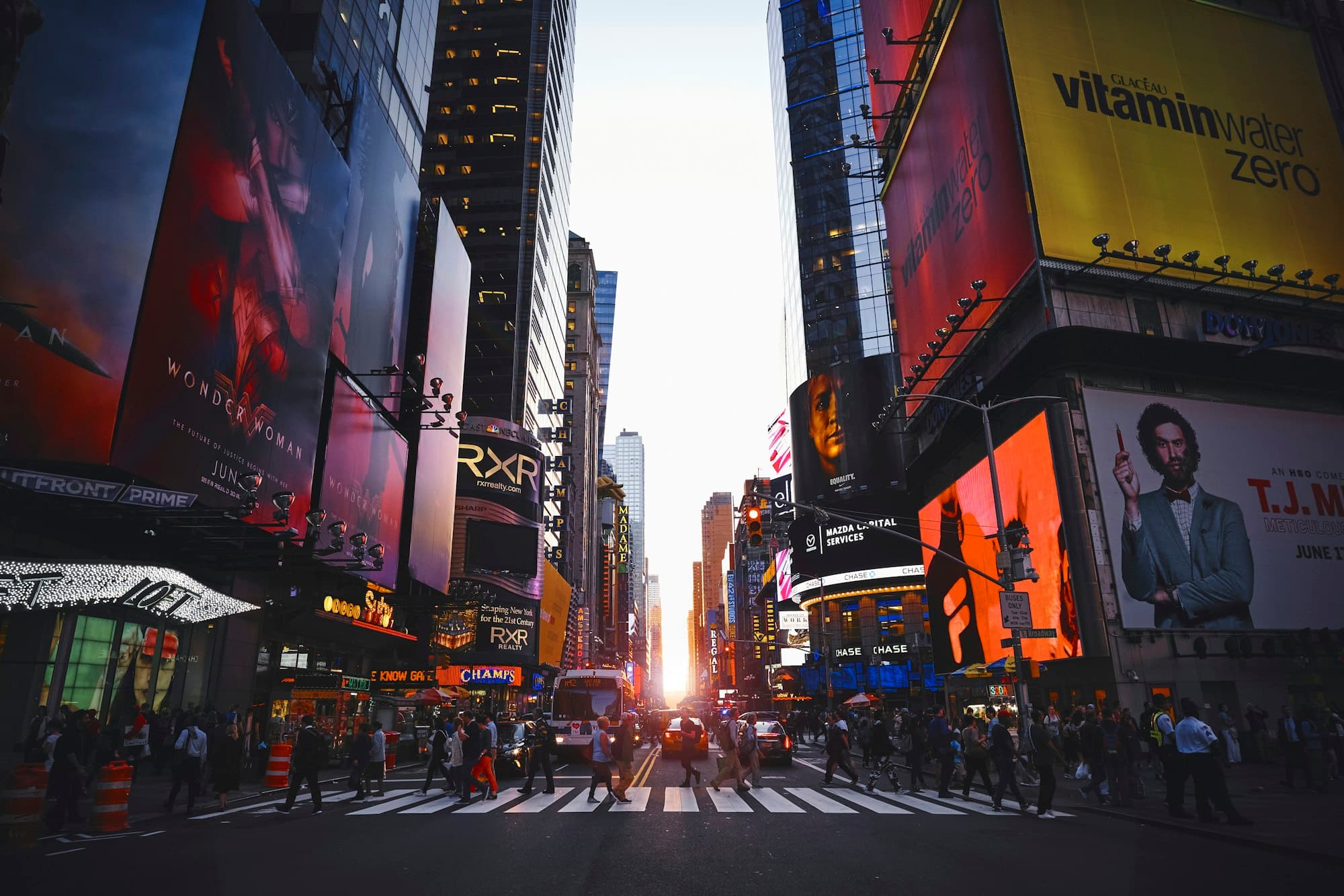
New York is a city of distinct, dense neighborhoods, and where you stay shapes your trip more than in almost any other city — the right base puts the icons, the best dining, or Central Park within walking distance, while the subway connects everything else around the clock. Because Manhattan packs so much into a small space, the decision is really about which side of New York you want on your doorstep. After many stays, this guide breaks down NYC's best areas and exactly who each one suits.
The key decision is balancing convenience, character, and budget. Midtown is the classic first-timer base, surrounded by the headline sights and transport; Lower Manhattan offers a modern, weekend-value alternative; SoHo, Greenwich Village, and Chelsea bring downtown style, dining, and nightlife; the Upper East and West Sides offer refined, museum-and-park living for families; and Williamsburg in Brooklyn delivers a hip, value-friendly base with skyline views. We cover them all.
Below you will find a quick-answer summary, a comparison table, then detailed breakdowns of each area — followed by transport advice and the questions travelers ask most. For the rest of your planning, see things to do in New York City, the JFK airport guide, and use the distance calculator for day trips to Washington, DC, or Boston.
Some links in this guide are affiliate links: if you book through them we may earn a small commission at no extra cost to you. It never affects which areas or hotels we recommend.
Jump to a section11
- 01Quick Answer: Where Should You Stay in New York?
- 02New York Areas at a Glance
- 03Key Takeaways Before You Book
- 04Midtown Manhattan — The Classic First-Timer Base
- 05Lower Manhattan (Financial District) — Modern Hotels & Weekend Value
- 06SoHo, Tribeca, Greenwich Village & Chelsea — Downtown Style & Dining
- 07The Upper East & Upper West Sides — Refined, Family-Friendly Living
- 08Williamsburg, Brooklyn — Hip, Local & Better Value
- 09How to Choose Your New York Area
- 10Getting Around From Your Base
- 11Recommended Areas by Traveler Type
Quick Answer: Where Should You Stay in New York?
For most first-time visitors, Midtown Manhattan is the best base — it puts Times Square, the Empire State Building, Central Park, and Broadway within walking distance and sits on top of the city's transport hubs. For downtown style and dining, SoHo, Greenwich Village, and Chelsea are ideal; for refined, family-friendly living near the museums and Central Park, the Upper East and West Sides; for modern hotels at better weekend value, Lower Manhattan; and for a hip, lower-cost base with skyline views, Williamsburg in Brooklyn.
The key insight: staying in Manhattan keeps you central and walkable to the icons, with Midtown the most convenient all-rounder. Choose a downtown neighborhood for character and nightlife, the Upper Side for calm and museums, or Brooklyn for value and a local feel — all well connected by the 24-hour subway.
New York Areas at a Glance
This table summarizes the main areas covered below. Rates reflect a typical well-reviewed mid-range double room in 2026; New York runs expensive by global standards, with rates rising sharply in peak periods and offering better value downtown on weekends.
| Area | Best For | Vibe | Typical Mid-Range Rate | Borough |
|---|---|---|---|---|
| Midtown Manhattan | First-timers, sights, transport | Bustling, central, iconic | $250–500 | Manhattan |
| Lower Manhattan (FiDi) | Modern, value-weekends | Modern, business, quieter nights | $200–400 | Manhattan |
| SoHo & Tribeca | Shopping, style, boutique | Chic, trendy, upscale | $300–600+ | Manhattan |
| Greenwich Village | Couples, dining, charm | Charming, leafy, romantic | $280–550 | Manhattan |
| Chelsea & Flatiron | Dining, art, nightlife | Lively, central, stylish | $260–500 | Manhattan |
| Upper East Side | Museums, families, refined | Elegant, calm, residential | $220–450 | Manhattan |
| Upper West Side | Families, Central Park, calm | Relaxed, residential, leafy | $220–450 | Manhattan |
| Williamsburg, Brooklyn | Value, hip, local, views | Trendy, youthful, artsy | $160–350 | Brooklyn |
Key Takeaways Before You Book
- Staying in Manhattan keeps you central and walkable to the icons — Midtown is the most convenient all-rounder for first-timers.
- Downtown (SoHo, the Village, Chelsea) is best for dining, nightlife, and character; the Upper Side for calm, museums, and families.
- Williamsburg in Brooklyn offers the best value with a hip, local feel and skyline views, a short subway ride from Manhattan.
- New York hotels are expensive and rooms are small; rates swing sharply by season and day, with downtown often cheaper on weekends.
- The 24-hour subway connects everything, so being near a station matters more than being in any single neighborhood.
- Book well ahead for the December holidays and autumn, the priciest and busiest times of year.
Midtown Manhattan — The Classic First-Timer Base
Midtown is the New York of the movies and the best base for a first visit. It puts the headline sights within walking distance — Times Square, the Empire State Building, Rockefeller Center, Broadway's theaters, Fifth Avenue shopping, and the southern edge of Central Park — and sits on top of the city's main transport hubs, including Grand Central and Penn Station, making the rest of the city and the airports easy to reach. It is busy, bright, and central, the beating heart of Manhattan.
As a base, Midtown suits first-timers and anyone who wants maximum convenience and the icons on their doorstep, with by far the largest concentration of hotels at every price point, from budget chains to landmark luxury. The trade-offs are that it is crowded, commercial, and less characterful than the downtown neighborhoods, and quieter on the residential eastern and western fringes. For a first trip focused on seeing the sights efficiently, no area is more convenient.
Who it suits: first-time visitors, theater-goers, shoppers, and travelers wanting the icons and transport on their doorstep. Who should look elsewhere: travelers seeking character, calm, or a local, residential feel.
Need a place to stay? Compare hotels in Midtown Manhattan, New York on Booking.com →
We may earn a small commission at no extra cost to you.
Lower Manhattan (Financial District) — Modern Hotels & Weekend Value
Lower Manhattan, around the Financial District, has transformed into an appealing place to stay, pairing landmark sights — the 9/11 Memorial, One World Observatory, Wall Street, and the ferries to the Statue of Liberty — with sleek modern hotels and a revitalized waterfront. Because it is a business district, it quietens on weekends when offices empty, which often means noticeably better hotel value than Midtown, especially on Friday and Saturday nights.
As a base, Lower Manhattan suits travelers who want modern hotels, the downtown sights, and good value, with excellent transport (it is a major subway interchange and the gateway to Brooklyn and the Staten Island Ferry). It is walkable to Tribeca and SoHo and a quick ride to Midtown. The trade-offs are that it can feel quiet in the evenings midweek and is farther from the Central Park sights. For value-focused travelers and those drawn to the downtown landmarks, it is a smart, increasingly popular choice.
Who it suits: value-seekers, travelers wanting modern hotels and the downtown sights, and weekend visitors. Who should look elsewhere: travelers wanting lively nightlife on the doorstep or proximity to Central Park and Midtown.
Need a place to stay? Compare hotels in Financial District, New York on Booking.com →
We may earn a small commission at no extra cost to you.
SoHo, Tribeca, Greenwich Village & Chelsea — Downtown Style & Dining
For style, dining, and character, the downtown neighborhoods are New York at its most desirable. SoHo and neighboring Tribeca are the chic, fashionable heart of the city — cast-iron architecture, designer boutiques, art galleries, and some of the most coveted (and expensive) hotels, suiting shoppers and style-conscious travelers. Just west, Greenwich Village and the West Village are the city's most charming, romantic neighborhoods, with leafy, low-rise streets, beloved restaurants and jazz clubs, and a village-like feel that draws couples.
A little north, Chelsea and the adjoining Flatiron and Union Square areas offer a lively, central, and stylish base — home to the High Line park, the Chelsea Market, a thriving gallery and nightlife scene, and excellent dining, all within easy reach of both downtown and Midtown. Together these neighborhoods offer the best of downtown Manhattan: walkable, atmospheric, and packed with the restaurants and bars New York is famous for, generally at upscale rates (though Chelsea offers a bit more range than SoHo).
Who they suit: SoHo and Tribeca for shopping and style; Greenwich Village for couples and charm; Chelsea and Flatiron for dining, art, and central nightlife. See things to do in New York City for the downtown highlights.
Need a place to stay? Compare hotels in SoHo, New York on Booking.com →
We may earn a small commission at no extra cost to you.
🏨 Find Hotels in New York, USA
Compare 2M+ properties on Booking.com — free cancellation on most stays. Filter by price, neighborhood, and traveler ratings.
Search Hotels in New York, USA →Affiliate link — we may earn a small commission at no extra cost to you.
🎟️ Top Experiences in New York City
Skip-the-line tickets and guided tours via GetYourGuide — free cancellation on most. We may earn a small commission at no extra cost to you.
🎫 Save on New York City Attractions
One pass covers multiple top attractions in New York City — usually cheaper than buying tickets separately if you plan to see more than two or three.
See New York City Passes →Affiliate link — we may earn a small commission at no extra cost to you.
The Upper East & Upper West Sides — Refined, Family-Friendly Living
Flanking Central Park, the Upper East and West Sides offer New York's most refined, residential, and family-friendly stays. The Upper East Side is elegant and genteel, home to Museum Mile — the Met, the Guggenheim, and more — along with upscale shopping and a calm, sophisticated atmosphere that suits couples and culture lovers. The Upper West Side, on the park's other flank, is relaxed and family-oriented, with leafy brownstone streets, the American Museum of Natural History, Lincoln Center, and easy access to Central Park's playgrounds and lawns.
As bases, both areas offer a quieter, more local New York within easy subway reach of Midtown and downtown, with a good range of hotels (the Upper West Side in particular offers solid mid-range value for families). The trade-offs are that they are residential and farther from the downtown nightlife and the headline Midtown sights, so evenings are calmer. For families, museum lovers, and travelers wanting an elegant, restful base beside Central Park, the Upper Sides are ideal.
Who they suit: families, museum and culture lovers, couples, and travelers wanting a calm, refined base by Central Park. Who should look elsewhere: nightlife seekers and those wanting to be in the thick of the downtown or Midtown action. Budget the trip with our trip cost calculator.
Need a place to stay? Compare hotels in Upper West Side, New York on Booking.com →
We may earn a small commission at no extra cost to you.
Williamsburg, Brooklyn — Hip, Local & Better Value
For a hip, local, and more affordable base, Williamsburg in Brooklyn has become one of New York's most appealing areas to stay. Just across the East River from Manhattan, this trendy, artsy neighborhood is full of independent boutiques, acclaimed restaurants, craft breweries, vintage shops, and rooftop bars with some of the best skyline views in the city. It offers a creative, youthful, distinctly Brooklyn atmosphere that many travelers now prefer to Manhattan.
As a base, Williamsburg suits travelers who want style, a local feel, and better value than Manhattan, and who do not mind a short subway ride (or the scenic ferry) into the city — Midtown and downtown are roughly 15–25 minutes away. Its hotels, often design-led and rooftop-equipped, generally cost less than equivalent Manhattan stays. The trade-off is that you are across the river from the main sights, adding a little travel time. For repeat visitors, younger travelers, and anyone wanting a hip, value-friendly base with skyline views, it is a standout choice.
Who it suits: value-seekers, younger and repeat visitors, foodies, and travelers wanting a trendy, local Brooklyn base. Who should look elsewhere: first-timers who want to be within walking distance of the Manhattan icons.
Need a place to stay? Compare hotels in Williamsburg, Brooklyn on Booking.com →
We may earn a small commission at no extra cost to you.
Keep reading
 Best Areas to Stay in New York CityNYC's best areas ranked and compared — with a scorecard and a clear best pick for first-timers, couples, families, budget, and…Best Hotels in New York CityHow to choose the right NYC hotel — the best areas, the landmark grand hotels, and the best picks for every budget and travel…Things to Do in New York CityThe city that never sleeps — culture, food, skylines, and energy unlike anywhere else
How to Choose Your New York Area
Manhattan keeps you central and walkable to the icons, with Midtown the most convenient all-rounder. First-timers focused on seeing the sights efficiently do best here.
Midtown for the icons and transport; SoHo and the Village for downtown style and dining; Chelsea for art and nightlife; the Upper Sides for museums and calm; Williamsburg for hip Brooklyn value.
First-timers: Midtown. Couples: Greenwich Village or the Upper East Side. Families: the Upper West Side. Budget: Williamsburg or Lower Manhattan on weekends. Nightlife: Chelsea or the Village.
Being near a subway station matters more than the exact neighborhood, given the 24-hour network. Book well ahead for the December holidays and autumn, the priciest, busiest times, using free-cancellation rates to lock in.
Getting Around From Your Base
New York's subway is the key to the city — it runs 24 hours a day, reaches every neighborhood, and is by far the fastest way around, especially given Manhattan traffic. A contactless card or phone (via OMNY) taps you straight through, with a weekly cap that can save money on longer stays. Manhattan's numbered grid makes much of the city wonderfully walkable, and buses, taxis, and ride apps fill the gaps, though the subway almost always beats them for speed.
From the airports, your base affects the easiest route in: JFK connects via the AirTrain and subway or the LIRR, while LaGuardia and Newark have their own bus and train links. For a full breakdown, see our JFK airport guide. To plan day trips and onward travel — New York to Washington, DC, Boston, Philadelphia, or Chicago — use the distance calculator and flight duration calculator, and the time zone calculator covers the difference from home.
Recommended Areas by Traveler Type
- First-time visitors: Midtown Manhattan, walkable to the icons and on the transport hubs.
- Couples & honeymooners: Greenwich Village for charm, or the Upper East Side for refined elegance.
- Families: the Upper West Side, beside Central Park and family-friendly museums.
- Luxury travelers: SoHo, Tribeca, and Midtown, home to the city's landmark luxury hotels.
- Budget travelers: Williamsburg in Brooklyn, or Lower Manhattan on weekends.
- Foodies & nightlife seekers: Chelsea, Greenwich Village, and the East Village for dining and bars.
- Repeat visitors & a local feel: Williamsburg in Brooklyn for a hip, residential base with skyline views.
Frequently Asked Questions
What is the best area to stay in New York for first-time visitors?
Midtown Manhattan is the best base for first-timers, placing Times Square, the Empire State Building, Broadway, Fifth Avenue, and the edge of Central Park within walking distance, on top of the city's main transport hubs. It has the widest hotel choice at every price. Travelers wanting more character might also consider Chelsea or Greenwich Village, which are central yet more atmospheric.
Which area of New York is best for families?
The Upper West Side is the best family area, with leafy residential streets, the American Museum of Natural History, Lincoln Center, and easy access to Central Park's playgrounds, plus good mid-range hotel value. The Upper East Side is another refined, family-friendly choice near Museum Mile. Both are calmer than Midtown while staying well connected by subway.
What is the cheapest area to stay in New York?
Williamsburg in Brooklyn offers the best value with a hip, local feel and skyline views, a short subway or ferry ride from Manhattan. Within Manhattan, Lower Manhattan (the Financial District) often drops in price on weekends when the business crowd leaves. Staying slightly outside Midtown, or in an outer-borough neighborhood near a subway line, is the key to saving in this expensive city.
Is it better to stay in Manhattan or Brooklyn?
For a first trip focused on the icons, Manhattan is more convenient and keeps you walkable to the main sights. Brooklyn — especially Williamsburg — offers better value, a hip local atmosphere, and great skyline views, at the cost of a short subway ride into the city. First-timers usually prefer Manhattan; repeat visitors and value-seekers increasingly choose Brooklyn.
Where should I stay in New York for nightlife and dining?
The downtown neighborhoods lead for nightlife and dining: Chelsea, Greenwich Village, and the East Village are packed with bars, restaurants, and music venues, while the Lower East Side and Williamsburg in Brooklyn have buzzing late-night scenes. SoHo offers chic dining and cocktails. Chelsea and the Village are the most central choices for a base with nightlife on the doorstep.
Do I need a car in New York City?
No — a car is a liability in New York given heavy traffic, scarce and very expensive parking, and the excellent 24-hour subway. Use the subway, buses, walking, and the occasional taxi or ride app to get around. Only consider a rental if you plan to travel well outside the city, and even then, pick it up as you leave rather than keeping it in town.
How many days do you need in New York City?
Four to five days covers New York's headline sights — the major landmarks, a couple of museums, Central Park, a Broadway show, and a few neighborhoods — at a reasonable pace, while a week lets you explore more of downtown, Brooklyn, and day trips in depth. The city is dense and endless, so even a week leaves plenty for a return visit.
Are New York hotels expensive, and how can I save?
Yes — New York is one of the most expensive hotel cities in the world, with small rooms and rates that swing sharply by season and day. To save, consider Lower Manhattan on weekends, Williamsburg in Brooklyn, or booking well in advance and avoiding the December holidays and autumn peaks. Rooms are compact citywide, so check the size, and factor taxes into the quoted rate.

About the author
SK Kutubuddin · Founder & Editor
The founder and editor of Travel and Time. An aeronautical engineer with close to two decades in aviation, I build the site’s flight, distance, and trip-planning tools myself and check every figure before it goes live. I write from Kolkata, India.
More about author →