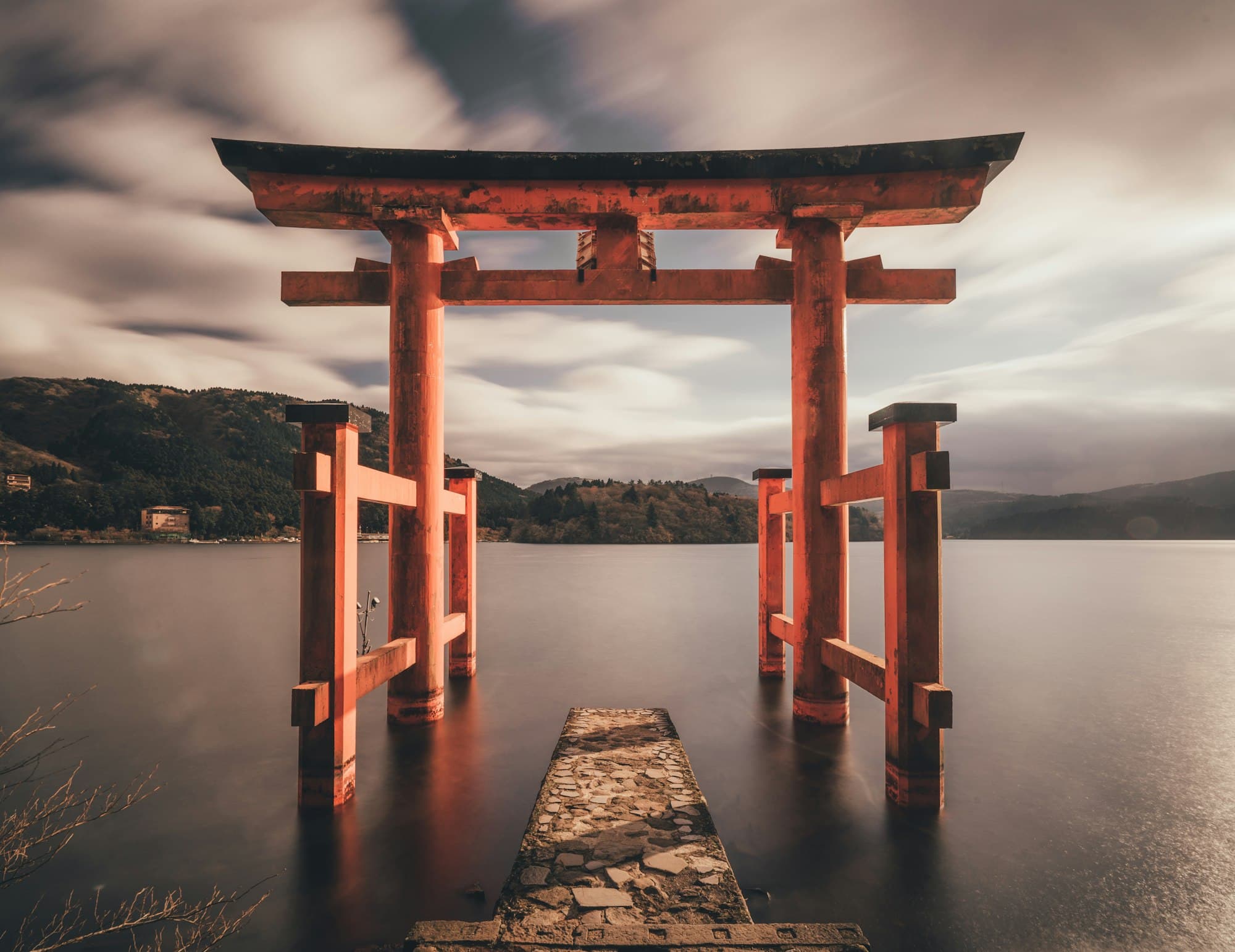
One week is enough for a first-timer to experience the essential Japan — the electric energy of Tokyo, a glimpse of Mount Fuji and an onsen night in Hakone, and the temples, shrines, and traditional streets of Kyoto. This itinerary links all three by the famous bullet train, keeping the days realistic rather than rushed.
It assumes you fly into Tokyo (Haneda or Narita) and out of the same, looping Tokyo–Hakone–Kyoto and back. A Japan Rail Pass or individual shinkansen tickets cover the long hops. For where to base yourself in the cities, see our guides on where to stay in Tokyo and the best areas to stay in Tokyo, and for the wider picture, the Japan travel guide.
Spring (late March to April) for cherry blossoms and autumn (October to November) for fall colour are the most beautiful and popular seasons. May and early June are mild and quieter; summer is hot and humid; winter is crisp and clear, ideal for Fuji views.
Day-by-Day Itinerary
Arrival in Tokyo
Arrive at Haneda or Narita and transfer into the city — see our Tokyo Haneda airport guide for the easiest routes. Settle into your hotel, pick up a Suica or PASMO IC card, and ease in with an evening in a lively district like Shinjuku or Shibuya.
- ✓ Shibuya scramble crossing
- ✓ Dinner in Shinjuku
- ✓ First convenience-store haul
🛏 Where to stay: Shinjuku or Shibuya — central, on the Yamanote Line, with the widest hotel choice.
💡 Tip: Set up a digital Suica in your phone's wallet before you arrive to skip the ticket-machine queues.
Tokyo Highlights
Spend a full day on Tokyo's greatest hits. Start with the traditional side — Senso-ji temple in Asakusa and a riverside walk — then swing modern with Shibuya, Harajuku, and the Meiji Shrine. See our things to do in Tokyo guide for the full menu of options.
- ✓ Senso-ji temple, Asakusa
- ✓ Meiji Shrine & Harajuku
- ✓ Shibuya Sky observation deck
🛏 Where to stay: Tokyo (second night).
💡 Tip: Tokyo is vast — group sights by area and lean on the Yamanote Line loop to avoid backtracking.
Tokyo: Markets, Gardens & Neighbourhoods
A second Tokyo day to go deeper: the Tsukiji Outer Market for a sushi breakfast, the gardens of the Imperial Palace, and an afternoon in a neighbourhood that matches your taste — electronics in Akihabara, youth fashion in Harajuku, or refined dining in Ginza.
- ✓ Tsukiji Outer Market breakfast
- ✓ Imperial Palace East Gardens
- ✓ teamLab digital art museum (book ahead)
🛏 Where to stay: Tokyo (third night).
💡 Tip: Book timed-entry attractions like teamLab and the Shibuya Sky deck online in advance — they sell out.
Hakone & Mount Fuji
Take the train to Hakone, the mountain hot-spring region with the best easy access to Mount Fuji views. Ride the Hakone Loop — mountain railway, ropeway over volcanic Owakudani, and a pirate-ship cruise on Lake Ashi — then soak in an onsen and stay overnight in a traditional ryokan.
- ✓ Lake Ashi cruise with Fuji views
- ✓ Owakudani volcanic valley
- ✓ Onsen and ryokan dinner (kaiseki)
🛏 Where to stay: Hakone ryokan — the onsen-and-kaiseki experience is a trip highlight.
💡 Tip: Pack an overnight bag and forward your main luggage ahead to Kyoto using Japan's takkyubin courier service.
🏨 Find Hotels in Japan
Compare 2M+ properties on Booking.com — free cancellation on most stays. Filter by price, neighborhood, and traveler ratings.
Search Hotels in Japan →Affiliate link — we may earn a small commission at no extra cost to you.
🎟️ Book Top Experiences in Tokyo
Skip-the-line tickets, day trips, and guided tours — Viator lists experiences worldwide, with free cancellation on most bookings.
Browse Tours on Viator →Affiliate link — we may earn a small commission at no extra cost to you.
Bullet Train to Kyoto
Board the shinkansen to Kyoto (around 2 hours and 15 minutes from the Hakone area via Odawara), watching for Mount Fuji from the right-hand window. Arrive in Japan's old capital and spend the afternoon easing in — the Gion geisha district and a first temple as the crowds thin.
- ✓ Shinkansen with Fuji views
- ✓ Gion geisha district at dusk
- ✓ Yasaka Shrine & Higashiyama lanes
🛏 Where to stay: Kyoto — near Kyoto Station or central Gion/Kawaramachi for walkability.
💡 Tip: Sit on the right (D/E seats) heading west from Tokyo for the best chance of a Mount Fuji view.
Kyoto's Temples & Bamboo
A full day among Kyoto's icons. Start early at the Fushimi Inari shrine's thousands of vermilion gates before the crowds, then cross to Arashiyama for the bamboo grove and riverside, and finish at the golden Kinkaku-ji. It is a big day — use taxis or buses to link the far-flung sights.
- ✓ Fushimi Inari's torii gates at dawn
- ✓ Arashiyama bamboo grove
- ✓ Kinkaku-ji (Golden Pavilion)
🛏 Where to stay: Kyoto (second night).
💡 Tip: Arrive at Fushimi Inari by 7–8am to walk the gates in relative peace before the day-trippers arrive.
Kyoto to Tokyo & Departure
Enjoy a final Kyoto morning — Kiyomizu-dera temple and a stroll through the Nishiki Market — then take the shinkansen back toward Tokyo for your flight home (around 2 hours 15 minutes to Tokyo Station). Travelers with a late flight can store bags and squeeze in last-minute Tokyo shopping.
- ✓ Kiyomizu-dera temple
- ✓ Nishiki Market food street
- ✓ Shinkansen back to Tokyo
💡 Tip: Check whether flying out of Haneda or Narita changes your final train connection, and leave a buffer.
📶 Stay Connected in Japan
Get a travel eSIM before you fly so you have maps, ride apps, and tour bookings the moment you land.
Get a Travel eSIM with Yesim →Affiliate link — we may earn a small commission at no extra cost to you.
Budget & Practicalities
Roughly $150–250 per person per day including hotels, meals, local transport, and attractions — Japan is more affordable than many expect, especially for food.
A 7-day Japan Rail Pass can be worth it for the Tokyo–Kyoto round trip plus extras; compare against individual shinkansen tickets for this route, as the pass rose in price.
A Hakone ryokan with kaiseki dinner, and reserved bullet-train seats in peak season.
Tips for This Trip
- → Get a Suica or PASMO IC card (or its digital version) for trains, metro, buses, and convenience stores.
- → Carry some cash — Japan is increasingly card-friendly but small restaurants, shrines, and rural spots are often cash-only.
- → Use the takkyubin luggage-forwarding service to send bags between cities so you travel light on the bullet train.
- → Reserve shinkansen seats in advance during cherry-blossom and autumn-foliage seasons.
- → Get a travel eSIM so you have maps and translation the moment you land — see our best eSIM for Japan guide.
- → Check entry rules before you go in our Japan visa requirements guide.
What to Pack for Japan
A Comfortable Daypack
Long sightseeing days
Japan is a walking country — you will easily clock 20,000 steps a day between temples and train stations. A light, comfortable daypack carries your layers, water, and souvenirs.
Check Price on AmazonPocket Wi-Fi Alternative: a Travel eSIM
Navigation and translation
Maps, train apps, and translation are essential in Japan. A travel eSIM gets you online the moment you land without hunting for a SIM counter.
Check Price on AmazonCash Wallet / Coin Purse
Cash-only spots
Japan still runs on cash in many places, and you will accumulate coins fast. A dedicated coin purse saves fumbling at temple donation boxes and vending machines.
Check Price on AmazonSlip-On Shoes
Ryokan and temples
You will remove your shoes constantly — at ryokan, temples, and some restaurants. Comfortable slip-ons make it painless while still supporting big walking days.
Check Price on AmazonFrequently Asked Questions
Is 7 days enough for Japan?
Yes — a week is enough for a first-timer to experience the essentials: a few days in Tokyo, an overnight in Hakone for Mount Fuji and an onsen, and Kyoto's temples and traditional districts, all linked by bullet train. To add Osaka, Hiroshima, or Nara at a relaxed pace, 10–14 days is better.
What is the best way to travel between Tokyo and Kyoto?
The shinkansen (bullet train) is the best way — it takes about 2 hours 15 minutes between Tokyo and Kyoto, runs frequently, and is far more convenient than flying once you factor in airport time. A Japan Rail Pass can cover the round trip plus extras, though you should compare it against individual ticket prices for this route.
Do I need a Japan Rail Pass for this itinerary?
It depends on the price at the time of your trip. The 7-day pass covers the Tokyo–Kyoto round trip and the Hakone-area trains, but after recent price rises it is worth comparing the pass cost against buying individual shinkansen tickets for this specific route before deciding.
What is the best time to visit Japan?
Spring (late March to April) for cherry blossoms and autumn (October to November) for fall colour are the most beautiful and popular seasons, so book early. May and early June are mild and less crowded, summer is hot and humid, and winter is crisp and clear with the best Mount Fuji views.
Where should I stay in Tokyo for this trip?
Shinjuku or Shibuya are ideal first-timer bases — central, on the Yamanote Line, and packed with dining and transport links. See our where to stay in Tokyo and best areas to stay in Tokyo guides for a full breakdown by neighbourhood and travel style.